
Advanced Materials Science Research in Polymers, Plastics & Energy Materials
About the National Institute for Materials Advancement
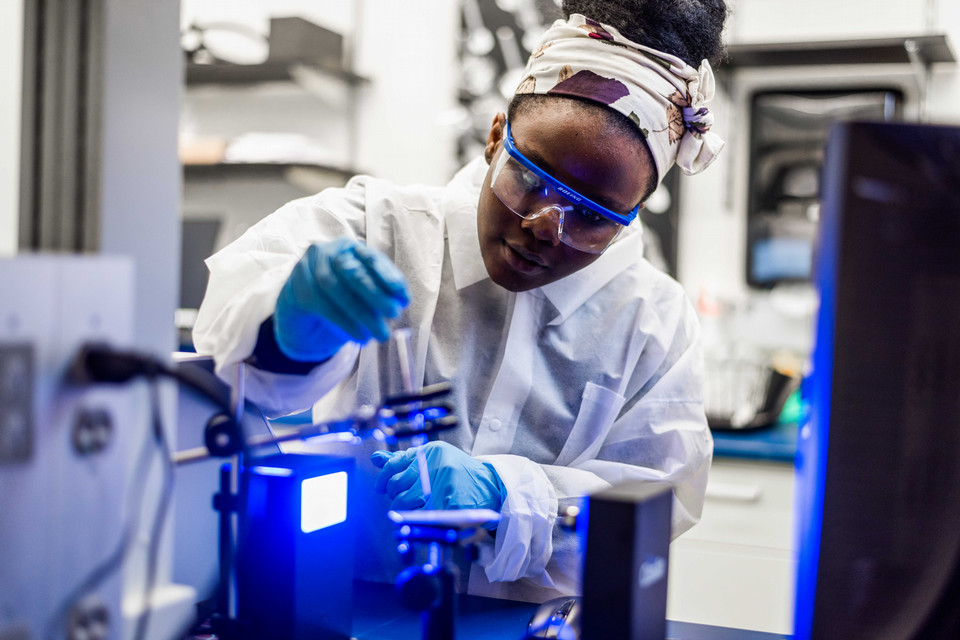
NIMA is a global leader in advanced research and development, driving innovation at the intersection of polymers, plastics, batteries, semiconductors, and electroactive materials. Guided by industry-leading experts, we push the boundaries of material science to develop cutting-edge, sustainable solutions that power the technologies of tomorrow. Our mission is to accelerate progress across these critical sectors by transforming scientific insight into real-world impact.
Breaking New Ground is Normal Here
At NIMA, innovation isn’t the exception — it’s the expectation. Every day, we advance the development and responsible use of polymers, plastics, and next-generation materials critical to batteries, semiconductors, and electroactive systems. Our team of leading scientists, engineers, and educators brings deep expertise in materials science and a strong track record in applied research. Together, we are shaping the future of high-performance, sustainable technologies across a wide range of industries.
Our Mission & Vision
The goals of NIMA are focused yet far reaching. By combining education with commercial applications and research, the impact of our efforts and output will further industries and renewable products for generations.
Forming the Future
The mission of NIMA is to catalyze manufacturing growth throughout the region by leveraging existing core competencies of materials science and materials processing at PSU to build a diversified technology-based economy across the four-state region.
The National Institute for Materials Advancement (NIMA), located at Pittsburg State University, is a global leader in bio-based materials and energy-related research, centrally located in mid-America’s agroeconomy, acting as a lighthouse for recruiting high-potential students and talented researchers, focused on developing a highly sought-after technology-based workforce in the field of plastics, polymers, and electroactive materials.
We strive to create circular economies. Linear economies create waste. Circular economies eliminate waste to serve people and the environment better.
What We Do
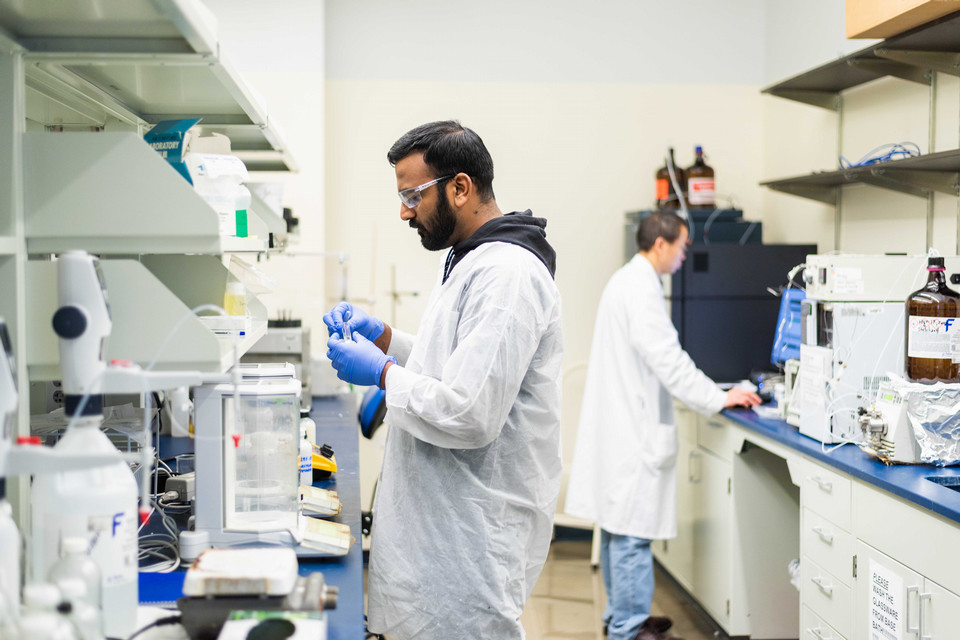
NIMA contributes to the advancement of renewable resource technology by helping to develop a highly skilled workforce, supporting innovative companies, and conducting collaborative research to better the materials science industry.
Industry Leading Research
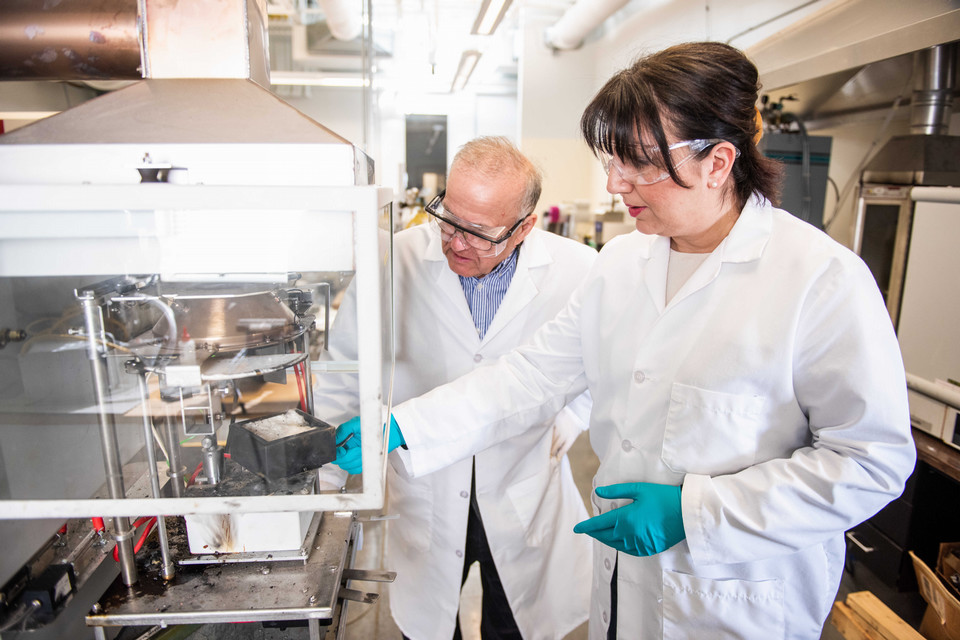
Every day, we are defining and refining rapid, safe, and cost-effective chemical processes to advance renewable polymers and modify feedstock materials such as vegetable oils, proteins, starches, cellulose, lignin, and more for controlled and enhanced reactivity.
In addition to synthesizing and developing new polymers, plastics, and elastomers with novel properties, we improve the thermo-mechanical properties, processing, and performance properties of circular economy polymers to the level comparable to, or better than, conventional petroleum-based polymers.
Through a unique synthesis of academic excellence, industry expertise, and focused effort, we offer researchers, students, and companies the chance to collaborate and succeed in reimagining and reshaping what’s achievable in the world of materials science.
Train the Next Materials Science Technology-Based Workforce
The unique connection between NIMA and Pittsburg State University allows students to get hands-on experience working to solve real issues through polymer chemistry, materials science, and plastics processing, using the latest technology and methodology.
Support Innovators & Innovative Companies
If you have an issue you’re trying to solve, we can help. From entrepreneurs to Fortune 500 companies, we have the capabilities and vision to find and create innovative uses of polymers from ideation to planning to implementation.
If you’re unsure if polymers are the answer, reach out. The uses of polyurethanes, electroactive materials, foams, and plastics for a circular economy are vast and rapidly growing.
Contract Testing & Analysis
We are fully equipped to offer a wide range of tests including chemical composition, formulation, routine testing, non-routine analysis, failure analysis, physical properties, and more.
The Forefront of Testing Services
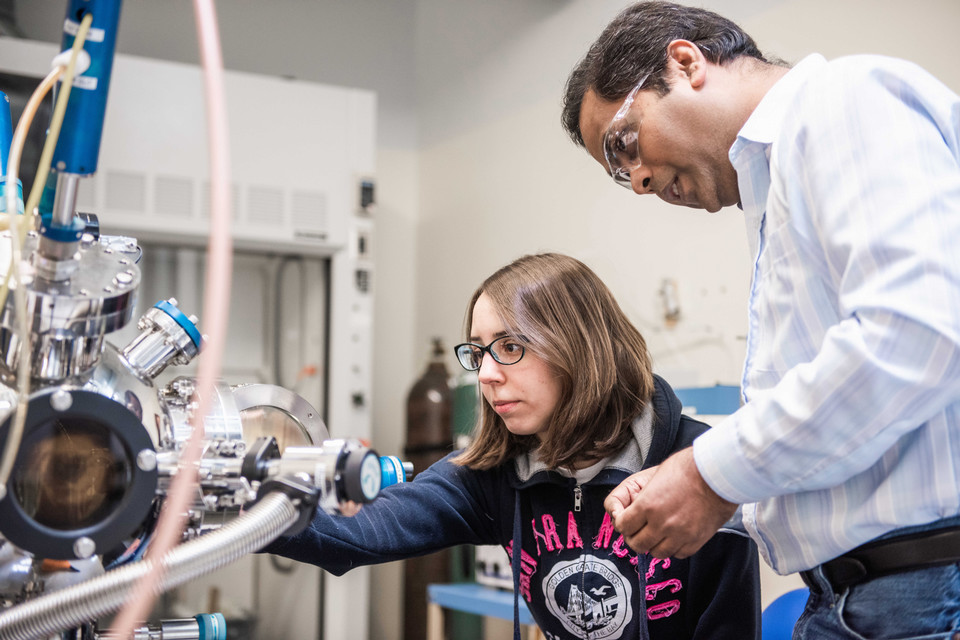
NIMA researchers are fully equipped to offer a wide range of tests, including composition, formulation, routine testing, non-routine analysis, failure analysis, physical properties, and more. Additionally, the Pittsburg State University Departments of Plastics Engineering Technology and Chemistry support research capabilities.
Testing Services
Physical Properties
- Tensile (at different temperatures)
- Compressive (at different temperatures)
- Flexural (at different temperatures)
- Impact
- Rebound Resilience
- Foam Characteristics (Foamat)
- Temperature
- Cream, Tack-Free, and Rise Time
- Dielectric Properties
- Hardness (Shore A, D, and Vickers Indenter)
- Open/Closed Cell
- Density
- Solid
- Solution
- Viscosity
- Melt
- Solution
- Abrasion
- Friability
- Environmental Stability (light, solution, temperature)
- Microstructure
- Scanning Electron Microscopy (SEM)
- Atomic Force Microscopy (AFM)
- Crystallinity and Phase Purity using X-Ray Diffraction
- Surface Area and Porosity
- Elemental Analysis using X-Ray Fluorescence Spectrometer
Thermal Properties
- Thermogravimetry (TGA)
- Thermogravimetry with FT-IR and GC-MS
- Differential Scanning Calorimetry (DSC)
- Dynamic Mechanical Analyzer (DMA)
- Thermomechanical Analyzer (TMA)
- Flammability
- Dimensional Stability
- Thermal Conductivity (R-value)
Chemical Analysis
- FT-IR
- Raman
- NMR
- Hydroxyl Number
- Epoxy Number
- Acid Value
- Isocyanate Content
- Caloric Value of Solids and Liquids
- Molecular Weight
- Gel Permeation Chromatography (GPC)
- Viscosity
- Vapor Phase Osmometry (VPO)
Electrical Properties
- Current-Voltage Characteristics
- Capacitance-Voltage Characteristics
- Cyclic Votlammetry
- Galvanostatic Charge- Discharge
- Energy Density
- Power Density
- Cyclic Stability
- Electrochemical Impedance Analysis
Our Community.