
Facility Operations
About
Facility Operations supports the university’s educational mission by maintaining campus buildings and grounds that enable teaching, research, and community service to occur safely and efficiently, while providing essential services such as building maintenance and operations, custodial and general services, utilities and energy management, landscaping and lawn care, central storeroom, carpool and vehicle maintenance, trash and recycling services, occupational safety, and environmental services.
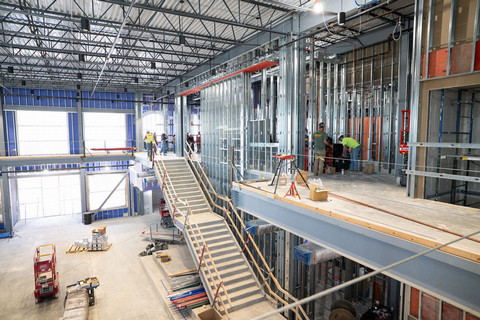

Building Trades
The Building Trades division of Facility Operations provides comprehensive campus maintenance through skilled departments including Carpentry, Electrical, Electronics, Paint, Plumbing, and HVAC/R. These teams handle everything from construction, renovations, cabinetry, locksmithing, electrical and electronic systems, painting, plumbing, and hazardous waste disposal to heating, cooling, and refrigeration for over 1,000 pieces of equipment. Together, they ensure campus facilities are safe, functional, code-compliant, and well-maintained in support of daily operations and major university events.
Building Trades
Carpentry
The Carpentry department at Pittsburg State University is staffed by craftsmen with many years of experience and provides a wide variety of services. The services include, but are not limited to, cabinetmaking, carpentry, glazing, locksmithing, masonry, roofing and many other tasks that are required to ensure the maintenance and operation of Pittsburg State University. We work closely with the other Facility Operations departments, Planning, Design & Construction, as well as the individual University Departments that we serve.
The cabinet shop designs, builds, installs and maintains custom cabinets, office furnishings, classroom fixtures, storage units, and restores furniture. Other items such as picture frames, plaques, display cases and other specialized wood projects are also constructed by the cabinet shop.
Locksmithing services are also provided by the Carpentry department. Services provided include key duplication, repair, and/or replacement of office/classroom furnishing locks, removal of padlocks on lockers as well as other professional locksmith services. However, we do not provide car opening services. Locksmithing also provides maintenance and repair of approximately 3,000 locks on the Best Master Key system on the Academic Campus. Please see the Locks & Keys policy for more information regarding these services.
Estimates are available upon request with the submission of a work order on projects approved for the academic campus. Renovation projects, structural changes and large-scale projects must also secure approval from Planning, Design & construction, the Master Planning Committee, and the Director of Facility Operations. We do not provide services for private or non-university related use.
The list of work performed by the Carpentry department ranges from small tasks such as hanging pictures to major construction projects such as the renovation of the Crimson Village Complex. Some of the many services provided by the Carpentry department are; the installation of bulletin boards, white boards, signage, projection screens and other classroom equipment; the repair and assembly of office and classroom furniture; installation and repair of suspended ceiling systems; repair and installation of flooring and related accessories; general carpentry, construction and renovation projects: masonry duties such as repair and replacement of concrete paving and curbs, minor tuck pointing, the setting of stone, block and brick work; replacement of broken glass and window repair; installation of window coverings and blinds; minor roof repair and maintenance; and other duties that are required for the smooth operation of the campus. If you have a question about the services the Carpentry department provides contact Construction & Repair Department Supervisor at extension 4781 for assistance.
To request services from the Carpentry department, please secure approval from your department head and fill out a "Work Order Request" including the appropriate GL string. If it is an emergency situation, please contact the Construction & Repair Department Supervisor at extension 4781 or Facility Operations’ main extension 4779. Please follow up with the submission of a work order request.
Electrical / Electronics
Electrical
The electrical staff is responsible for installing and maintaining lighting, electrical equipment, cable systems (except for telephone), clock systems, elevators, motors, and special equipment. In addition, emphasis is placed on checking all electrical systems for compliance with NFPA 70 (National Electric Code). Electricians also stand by at special events, such as football games and commencement, to ensure that any malfunctions in electrical equipment are quickly corrected.
The electrical staff installs, trouble-shoots, and maintains lighting control systems, ventilation fans, various types of high and low voltage switch gear, elevators, clock systems, and control circuits; just to mention some of the large quantity of electrical equipment on campus. By monitoring the installation of electrical equipment, the electrical staff also assure compliance with the NFPA 70 by contractors.
To request services from the Electrical department, please secure approval from your department head and fill out a "Work Order Request" including the appropriate GL string. If it is an emergency, please contact the Facility Management Department Supervisor at extension 4770 or Facility Operations’ main extension 4779. Please follow up with the submission of a work order request.
Electronics
The electronics staff install, trouble-shoot and maintain computerized emergency lighting systems, complex electronic control equipment for scoreboards, message centers, public address systems (both fixed and portable) and specialized electronic circuitry in other campus equipment.
Our staff also has the responsibility of inspection, testing, maintenance, and repair of the campus 2-way radio communications system, emergency standby generator systems, campus-wide energy management system, access control, fire alarm and security monitoring equipment. Inspection and testing records for the electronic life safety equipment are maintained by the Electronics Department. Electronics staff serve as the liaison between the University and State and local fire authorities to ensure our facilities meet the current adopted regulations of the National Fire Protection Association and the International Code Counsel. They work closely with University Police, the Office of Planning, Design, and Construction, and other campus departments on systems administration, corrective action, policy development, and capital improvement to warrant the safety and comfort of our faculty, staff, students, and guests.
The Electronics staff also work at special events, such as football games and commencement, to ensure that all systems are operating properly and that any malfunctions in electronics equipment are quickly corrected. They are also responsible for providing access to and facilitating operation of the mass notification systems to assist in the process of a safe and orderly evacuation of the premises should an emergency event occur such as a fire or severe weather event. Sensors for electric, water, and natural gas utilities, HVAC, lighting, fire systems, and security monitoring have been placed in strategic locations throughout campus buildings so that temperatures, humidity, energy usage, smoke, fire, and security can be monitored and controlled by various departments on campus. Electronics staff also monitor these building management systems and will respond to alarm events to confirm conditions, verify accuracy of information, and collaborate with other responsible entities to facilitate a timely restoral of service.
To request services from the Electronics department, please secure approval from your department head and fill out a "Work Order Request" including the appropriate GL string. If it is an emergency, please contact the Facility Management Department Supervisor at extension 4770 or Facility Operations’ main extension 4779. Please follow up with the submission of a work order request.
Environmental Services
Rules and regulations concerning hazardous materials can be complicated. While many PSU departments regularly purchase and use hazardous materials, only Facility Operations may dispose of hazardous waste. For questions concerning the safe handling or disposal of any such materials, or for any other environmental concerns, please use extension 4702. If you have hazardous waste that needs to be disposed of, please submit a work order including a GL string.
In case of an environmental emergency, please contact Facility Operations directly at extension 4779. If the emergency occurs outside of normal business hours, please contact PSU Police and Public Safety at extension 4624.
Painting
Painting of all the academic buildings is the responsibility of the Facility Operations Paint Department. All painting must be completed by the Paint Department or an approved contractor. Outside contractors must be approved by Facility Operations and/or Planning, Design & Construction prior to any work being performed. For more policy information please see Facility Operations Policies & Guidelines.
Interior and exterior paintings are scheduled on a rotating basis, modified, when necessary, based on actual need. Every effort is made to perform exterior painting frequently enough to avoid deterioration of facilities. All streets, crosswalks and curbs are repainted every summer.
Each building has its' own color schemes that have been developed by the deans, architects, Planning, Design & Construction, and the Design Review Committee. When selecting colors for halls, offices, labs, etc., these are the colors you may choose from. For questions regarding color schemes and approved colors please contact the Construction & Repair Department Supervisor at 4781.
To request services from the Paint department, please secure approval from your department head and fill out a "Work Order Request" including the appropriate GL string. If it is an emergency, please contact the Construction & Repair Department Supervisor at extension 4781 or Facility Operations’ main extension 4779. Please follow up with the submission of a work order request.
Plumbing
The Plumbing department has the responsibility to maintain the general plumbing systems on campus including maintenance of steam vents, sewage lines, water lines, gas lines and the steam piping system. All work is performed according to codes and regulations.
General plumbing duties involve repairing and installing pumps, safety valves, hot water tanks, water lines, plumbing fixtures, and various specialized kitchen and laboratory equipment. In addition to repairing all types of clogs, plumbers install, repair, and insulate water, sewer, gas, and laundry systems. The plumbing section tests for water and gas leaks, maintain signs, and is responsible for high pressure steam distribution systems.
The Plumbing department also includes welding and sheet metal work. Skilled craftsmen design and fabricate metal duct work, ventilation systems, metal roofing, flashing, vent hoods, electrical boxes, and various metal fixtures that often require a great deal of innovation and creative design. Examples include metal cages and signs, guard rails, accessories for lawn mowers, truck and tractors, door locks, handles and hardware, fence posts, gates, and brackets. Welding is also performed on steam and water lines.
To request services from the Plumbing department, please secure approval from your department head and fill out a "Work Order Request" including the appropriate GL string. If it is an emergency, please contact the Construction & Repair Department Supervisor at extension 4781 or Facility Operations’ main extension 4779. Please follow up with the submission of a work order request.
Refrigeration, Heating and Air Conditioning
The Refrigeration, Heating and Air Conditioning department is staffed by trained technicians who install, operate, maintain, and repair over 1000 pieces of HVAC/R equipment across campus. Technicians are certified, as required, with the Environmental Protection Agency with regard to safe and proper handling of CFCs (chlorofluorocarbons).
Among the equipment maintained, are 17 chillers with a cooling capacity in excess of 3,500 tons. Water from these chillers is cooled to approximately 42º and pumped through a network of piping, to more than 85 central station air handling units and hundreds of individual fan coil units. From there, conditioned air is distributed to classrooms and offices. Eight of these chillers are water cooled employing the use of seven cooling towers. Water is pumped through the chiller's condenser which absorbs heat and is then pumped outside the building and through the cooling tower. Evaporation lowers the temperature of that water approximately 10º, and is then returned to the chiller to start the process over again. This condenser water is treated with scale inhibitors and biocides to maintain an efficiently operating system.
Air handling units are serviced on a regular basis according to a preventive maintenance schedule. During this process, bearings are lubricated, drive belts are replaced and more than 2,600 filters are replaced each year.
Additionally, the HVAC/R department is responsible for maintaining the following:
- 240 split-system or package rooftop air conditioners and heat pumps.
- 130 window air conditioners or package terminal air conditioners.
- Approximately 55 gas-fired furnaces.
- Nearly 400 fan-powered variable air volume terminals.
- 70 Chilled or condenser water circulating pumps.
- More than 100 refrigerated drinking fountains.
- Numerous laboratory fume hoods.
- Numerous exhaust and ventilation fans.
- Nearly 20 ice machines.
- More than 100 refrigerators and freezers (including walk-ins, reach-ins and prep tables).
- Approximately 25 air compressors.
- Hundreds of other heating, air conditioning, ventilation and refrigeration items.
To request services from the Refrigeration, Heating and Air Conditioning department, please secure approval from your department head and fill out a "Work Order Request" including the appropriate GL string. If it is an emergency, please contact the Construction & Repair Department Supervisor at extension 4781 or Facility Operations’ main extension 4779. Please follow up with the submission of a work order request.
Services & Grounds
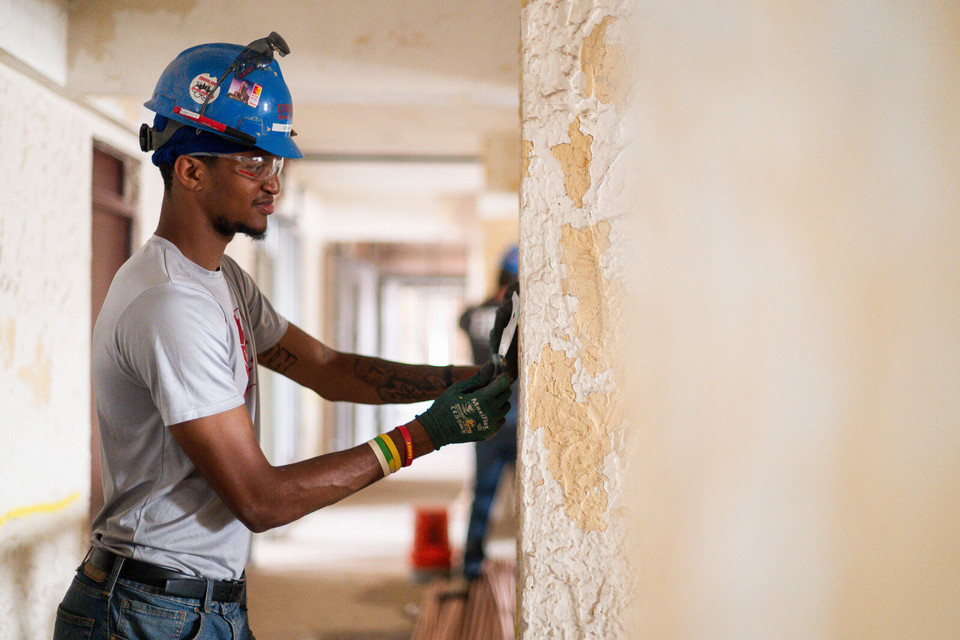
The Services and Grounds division of Facility Operations provides essential campus services, including administrative support, utilities, custodial services, grounds maintenance, storeroom operations, general services, and transportation; ensuring efficient operations, safety, and a well-maintained campus environment. The department manages building heating systems (steam, geothermal, and independent boilers), energy efficiency, custodial cleaning, grounds and landscape upkeep, maintenance inventory and freight handling, campus deliveries, event setup, furniture and equipment moves, and vehicle maintenance and carpool services.
Services and Grounds
Administrative Services
Facility Operations' Administrative Services consists of an Accountant/Office Manager and an Administrative Associate. This department supports the Director of Facility Operations. Various duties performed by Administrative Services staff includes customer service, payroll and personnel recordkeeping, forwarding and assignment of all work orders, Carpool billing for trip mileage, gasoline, oil, and other miscellaneous charges, monthly materials billing for reimbursable work orders, all accounts receivable and payable, budget reporting, as well as, other miscellaneous services.
Boiler Room
The main campus is heated by steam that is produced by natural gas fired boilers located at the Physical Plant building and piped to buildings through utility tunnels. Each building receives steam at a temperature of nearly 375 degrees Fahrenheit and at a regulated pressure of about 65 PSI (pounds per square inch). The plant literally recycles steam -- using 85 to 88 percent of the steam energy that is normally lost as "waste heat".
Steam that has been used (condensed in the system) is circulated as condensate back to the boiler room at the Physical Plant building and still contains some heating energy (about 180 - 190 degrees F.). The condensate is converted to steam and brought back up to about 400 degrees F. before being released back into the steam "recycling" system thereby achieving a high level of energy conservation. The steam heating system has other economic advantages. In milder weather, the water temperatures can be lowered to correspond with the weather conditions.
The Garfield Weede Building, Kansas Technology Center, Student Recreation Center, Tyler Research Center, and the Bicknell Family Center for the Arts have independent boiler systems in mechanical rooms within the buildings, while both the McPherson Building and Timmons Chapel are equipped with geothermal systems.
The heating systems are controlled by a computerized energy management system. A computer terminal, located at the Physical Plant building, monitors information from thermostats in individual buildings and controls valves that regulate the flow of steam and heat. It also analyzes flue emissions to key the boilers at peak efficiency.
The plant keeps 40,000 gallons of fuel oil in underground storage tanks for use if the natural gas supply is curtailed. This reserve would heat the university for four to six days in weather below 30 degrees F. and longer in milder weather.
Custodial Services
The Physical Plant is responsible for custodial services in all campus buildings except the Overman Student Center and the Wilkinson Alumni Center. Most custodial work is occupied areas is performed between 6:00 AM and 10:00 PM, Monday through Friday. Floor areas swept, wastebaskets emptied, chalkboards cleaned, chairs arranged, restrooms cleaned and other tasks performed on a daily basis.
A daily shift is assigned to each building. Work during hours when classes are held is coordinated to minimize interference with school activities. Offices are usually cleaned by the day shift between 6:00 AM and 8:00 AM or by the night shift after 4:30 PM. Custodians can be called to perform custodial tasks generally during daily activities. This activity is directed by the Custodial Manager, whose office is located in the Physical Plant building.
Custodial Work Performed
- Clean restrooms and replenish supplies; dust and clean offices, classrooms, conference rooms, laboratories and elevators; polish furniture.
- Vacuum carpets; dry mop and wet mop floors; strip, wax and polish floors; shampoo carpets.
- Collect and remove waste; sweep steps and sidewalks.
- Clean light fixtures; change light bulbs; clean drinking fountains.
- Clean windows and glass doors; clean blinds; wash walls.
- Report needed maintenance and repair items to supervisors; request supplies; lock and unlock buildings, offices and rooms; move furniture as needed for cleaning purposes.
- Request and store cleaning materials and supplies; keep storage closets and custodial rooms in order.
- Perform related work as requested.
Floors
- Where the surface is appropriate, (wood, tile, concrete, etc.) floors are scrubbed, sealed as required and waxed once or twice a year. Additional waxing or finishing is provided if needed whenever such service can be worked into the schedule.
Closing of Buildings
- The security of all campus buildings, offices and equipment is an important part of the custodial service. The objective of this department is to assist with building security through key control.
- Each building is opened and closed according to a rearranged schedule. As a rule, only the outside doors and selected classrooms are opened by Physical Plant employees, and it is the responsibility of the departments to open their own offices and laboratories.
- The evening shift is responsible for locking or securing buildings. Keys are assigned to custodians by their supervisor. It is the custodian's responsibility to see that the keys are not lost or stolen. All keys are checked in at the Physical Plant at the end of each shift and picked up again at the beginning of the next shift. Keys are not loaned.
Trash Removal
- Emptying wastebaskets, sweeping floors and removal of material which is obviously trash is the responsibility of the Physical Plant and is done by the custodial crew.
The trash is taken to pickup points where it is removed from campus by contracted trash services.
Additional Duties
- Cleaning of football stadium
- Setting up, working and tearing down for many campus events, ie. Commencement and ball games.
Tasks Not Performed By Custodians
- Move heavy furniture
- Any major moving of furniture
- Run errands
- Perform personal service
- Watch laboratory equipment (turn off equipment, etc.)
- Collect mail from offices
- Loan keys to anyone
- Answer telephones
Please contact the Director of Custodial and General Services for special requests.
Grounds Maintenance
Facility Operations has responsibility for the visual impact of the University. Appearance of the grounds and buildings is very important. National surveys indicate that more than half of all prospective students consider this when deciding where to go to school. Appearance also makes a difference in faculty and staff attitudes and influences legislators, parents and the general public.
The work of the Grounds Maintenance department is most notable in the spring when flower beds are in full bloom and the trees are alive with new color. Flower beds are used to their maximum to achieve the greatest effect. Spring flowers are replaced with summer flowers in May and removed after the first killing frost.
The Grounds Maintenance department maintains an office, greenhouse nursery and storage facility located directly east of the Weede Building. In addition, the Department also maintains an outdoor nursery and related materials.
The Grounds Maintenance crew is responsible for the maintenance of trees, grass, shrubs, flower beds, new plantings and athletic fields. They are also responsible for clearing snow from campus sidewalks, removing leaves and other debris and keeping storm sewer inlets clear and unobstructed.
To request services from the Grounds Maintenance department, please secure approval from your department head and fill out a "Work Order Request" including the appropriate GL string. If it is an emergency situation, please contact the Grounds Maintenance Supervisor at extension 4868 or Facility Operations’ main extension 4779. Please follow up with the submission of a work order request.
Storeroom and General Services
Storeroom
The Facility Operations Storeroom stocks and maintains a perpetual inventory of equipment, materials, and supplies required for all building, grounds, and custodial maintenance performed by Facility Operations personnel. Storeroom employees are responsible for maintaining necessary inventory levels, as well as ordering and inspecting stock.
All freight, UPS, Federal Express, and other express delivery services are delivered to the Storeroom on a daily basis. Storeroom employees log all packages and freight and prepare them for campus distribution by the General Services department. While efforts are made to assist with the placement of campus freight orders, unfortunately, the Storeroom does not have enough space to store freight for campus departments at the Physical Plant. Please consider the size and shipping times of orders prior to order placement. This is particularly important when ordering large shipments of furniture.
The Storeroom also assists campus departments with product ordering if needed. If you need the Storeroom to order a product for you, please submit an online "Work Order Request”. Please include funding information on these work orders. If you need assistance with product ordering, please contact Tonya Pentola at ext. 4780.
General Services
General Services' employees are responsible for the delivery of all UPS, Federal Express and other express delivery packages shipped to the Pittsburg State University. Delivery of packages is performed daily beginning at 12:30 PM and are delivered to the designated drop location in each building. Unfortunately, due to varying mail quantities and job duties, it is not possible to provide a set delivery time for each building. Below is a list of the drop locations in each building.
Campus Mail Drop Off Locations
- Alumni Center - Room 16
- Alumni Center (Advancement) - Basement
- Axe Library - Room 108
- Bicknell Center for the Arts – Inside Back Dock
- FCS - Room 101
- Gibson Dining - Kitchen
- Grubbs - Room 313
- Hartman (CTLT) - Room 332
- Heckert Wells - Room 104
- Horace Mann - Room 104
- Hughes - Room 115B
- Kansas Technology Center - Room S101, Mail Drop Off Room, E106C
- Kelce (COB) - Room 110
- Kelce (ITS) - Room 153C
- McCray (Music) - Room 103
- McPherson (Nursing) - Room 101
- Overman Student Center – Room 109
- Overman Student Center (Aladdin) - Room 133
- Porter (Art)- Room 101
- Student Health Center - Front Desk
- Student Recreation Center (HHPR) - Room 101
- Russ A - Room 110D
- Russ C - Room 106
- Tyler Research Center - Room 107
- Weede / Plaster - Equipment Room in Plaster
- Whitesitt- Mail Room, Room 107
- Yates (Math) - Room 224
In the event of unforeseen circumstances that will not allow for the delivery of the daily mail, the packages will be held until the next day.
The General Services department also delivers all University freight that is delivered to the Storeroom. Every attempt is made to deliver the freight as soon as possible following arrival; however, during very busy times, delivery may be delayed until time-sensitive work has been completed. If it is necessary that freight be delivered within a certain time frame, please contact Scott Broyles at ext. 4057.
Additional responsibilities of the General Services staff include assisting with delivery and retrieval of equipment for various special events on campus, as well as, delivering and retrieving all folding tables and chairs requested for these various activities and events.
Currently the University has 140 folding tables and 500 folding chairs which are available for use for campus events and activities. These tables and chairs are reserved on a first-come, first-serve basis; therefore, it is important that you submit your work order requests as far in advance as possible to ensure reservation of the number of tables and/or chairs needed.
This department is also responsible for all requests for movement of furniture, equipment, file cabinets, musical equipment, etc. on campus. General Services staff will try to accommodate all requests for moves and deliveries if it is reasonable, safe, and within our ability. The expense of professional assistance brought in due to the inability of the General Services staff to perform the move will be charged to the requesting department. Any requested moves that may present possible safety hazards to employees will be denied.
All requests for services, including requests for tables and chairs, must be submitted using the online "Work Order Request" system located on the Facility Operations web page. All work orders are scheduled in the order in which they are received. Every effort will be made to accommodate all requests. During busy periods, it is possible that a work request may not be possible due to previously scheduled work; therefore, it is best to submit your work orders as soon as possible to ensure that scheduling is possible during the time frame needed.
Please see the "Policies and Procedures" library for more information regarding table and chair use and other Facility Operations guidelines.
Vehicle Maintenance and Carpool
Skilled mechanics in the Physical Plant Garage area responsible for repairing, maintaining and reconditioning autos, vans, trucks, tractors, loaders, lift trucks, mowers, and small engines on miscellaneous equipment. Work often involves routine preventive maintenance and other functions of a major full-service garage. In addition, mechanics participate in the technical repair and testing of complex systems. These systems include computer ignition, electronic fuel injection, electric hydraulic systems and air conditioning on both gas and diesel equipment.
The Garage is also responsible for the maintenance and repair of all Central Carpool automobiles and vans, as well as, all scheduling and issuance of the vehicles.
All University Carpool vehicles are scheduled on a reservation basis and must be requested using the "Vehicle Authorization Form". Please see the "Carpool Vehicle Policy" for guidelines regarding Central Carpool vehicle use. Additionally, "People-Mover Policy" provides more information.
Carpool Mileage Rate:
| Vehicle Type | Car | 8 passenger Van | 12 Passenger Van | 12 Passenger Van |
|---|---|---|---|---|
| Charge Per Mile | 40 cents / mile | 46 cents / mile | 50 cents / mile | 75 cents / mile |
| Minimum Charge (50 miles per day) | $20.00 / day | $23.00 / day | $25.00 / day | $37.50 / day |
Van Driver Training
Van Driver Training is facilitated by Facility Operations and is required for any Pittsburg State University employee requesting to be the driver of a van from Carpool. The training must be completed prior to submission of the Vehicle Authorization Form as the Certificate of Completion is required to be submitted with the form. Please note that no reservations may be made without the submission of the proper Certificates of Completion.
For trip reservations where there will be multiple drivers, training Certificates of Completion must be submitted for each individual that will be driving the van during the trip and all drivers must be listed on the Vehicle Authorization Form.
Van Driver Training and Certificates of Completion are also required for reservations of the UPM (University People-Mover). Please see the People-Mover Policy for all other requirements for reservations of this vehicle.
Training courses are $35 per individual and are billed to the requesting department through the Administration and Finance office. To schedule training, please contact facilities@pittstate.edu.
Recycling Services
Pittsburg State University Recycling Services promotes campus sustainability by reducing landfill waste through convenient and efficient recycling practices that conserve energy, protect natural resources, and lessen environmental impact, while emphasizing reuse and repurposing, providing campus-wide recycling stations, outdoor containers, and free desk-side bins for paper, cardboard, and bottles/cans, and partnering with students, community groups, and local businesses to maintain a clean, safe environment and advance recycling awareness and sustainability education.
Recycle Program Initiatives
Construction Recycling
Recycling Services partners with the Office of Facilities Planning and with contractors to recycle materials from new construction and remodel projects across campus. Materials such as light fixtures, ceiling tile, doors, cabinets, miscellaneous metals, etc. are recovered from these projects and re-purposed, donated or sold. Materials such as cardboard, glass, pallets, metal, etc. are also collected and recycled from these projects and distributed to our local SEK Recycling facility.
Game Day Recycling
Our Pitt State Recycle team works all home football games collecting recyclables during game-day activities. Recycling containers are provided at numerous locations inside and outside of the stadium for collection and, with help from the Athletics Department, recycling bags are handed out to tailgaters as they enter the parking lots. The recycling team walks the parking lots and tents during tailgating activities working with students and fans to collect recyclables while promoting awareness about recycling practices at Pitt State. Recycling Services also partners with Sodexo to recycle cardboard and other materials used by food services for concessions and skybox needs. Recyclables are also collected in all skybox seating throughout the stadium.
E-Waste Recycling
Recycling Services partners with the Office of Information Systems and SEK Recycling to provide the University E-waste recycling program. Pickup of electronic equipment is provided at the request of offices/departments via the University E-Waste Form. Forms should be downloaded to your computer, filled out, and emailed to recycling@pittstate.edu. When using this form, please make sure that you are using the most recent version as updates are made to it as needed. All hard drives must be removed or wiped to DOD standards by Information Systems prior to pickup by Recycling Services. If you need assistance with step, please contact Gorilla Geeks at extension 4600 or geeks@pittstate.edu.
Move-In Mayhem
The "Move-In Mayhem" program was initiated in 2012 as an effort to divert the large amount of cardboard and other recyclables from the landfill. Recycling Services partners with University Housing, the "Students for Sustainability" group, and SEK Recycling to collect all recyclables on "Move-In" day every August. Containers for cardboard, plastic, paper and bottles and cans are provided by SEK Recycling and are placed at conveniently located areas outside of all dorms due to the high volume of waste generated during this time. University Housing staff and the "Students for Sustainability" group direct and assist students with their recycling to help ensure we are diverting as much material as possible. Recycling Services works to keep containers emptied and performs any sorting needed. Due to this group effort, we have been able to divert large numbers of recycles from our landfills.
Move-Out Madness
The "Move-Out Madness" project was started in 2010 in an effort to divert material from the landfill and to reuse those items left behind when students move out of the dorms in May. The program is currently managed by the student group "Students for Sustainability". The group partners with SEK Recycling and PSU Recycle Services to set up collection stations at all dorms and to collect all useable and recyclable materials generated by this event. The group collects items for several days leading up to spring Commencement ceremonies and then hosts an annual sale in the fall when students return for classes. The funds generated by the sale are used to support attendance of an annual sustainability conference in Iowa.
Annual Sale
Pitt State Recycling holds a public tag sale, at least once per year to facilitate the re-purposing of items that cannot be reused on campus. These sales are open to the public and are internally and locally advertised when a date has been set for the sale. One of the main focuses of the our sales is the effort we make to price items at a far lesser price than other community sales. This low pricing allows items to be available to everyone and to help ensure that more items might be re-purposed and re-used. Items are sold on a first-come, first-serve basis and no items will be sold prior to the sale date or start time of the sale. Presently, the only method of payment we accept is cash. Items not sold are either held back until the next sale or donated to Habitat for Humanity. donations are also made to other non-profit organizations or schools as needs arise.
Bottle Refill Stations
In an effort to reduce the use of plastic bottles on campus, Recycling Services provides bottle refill station retrofits for wall-mounted water fountains across campus as budget allows. Not all water fountains will accept the retrofit kits, so there may be areas where the refill stations are not possible at this time. However, all new fountains purchased will allow for the retrofit kit. If you do not have a bottle refill station in your area, and you believe there is a need for one, please call Tonya Pentola at ext. 4780.
Materials Accepted For Recycle
- Paper: All types, non-corrugated cardboard (i.e., pop cases, cereal/snack boxes), No food soiled or plastic coated paper
- Shredded Paper: should be bagged separately from other paper or recyclables
- Cardboard: Corrugated, Brown Kraft Paper (i.e., brown paper bags, brown packing paper), No food soiled or wax-coated paper
- Plastic: Numbers 1-7, Food Containers Must be Rinsed
- Aluminum: Food Containers Must be Rinsed
- Tin: Food Containers Must be Rinsed
- Glass: All Types and Colors, Food Containers Must be Rinsed
- Ink/Toner Cartridges: All kinds
- Metal: All kinds
- E-Waste: Any electronic device or any electrical device with a power cord
- Clothing: Coats, shoes, belts, purses, etc.
- Furniture: Any office furniture or office accessories that are no longer needed or broken
- Filing Cabinets: All kinds
- Large Appliances: Any University-owned appliances that are no longer needed or broken, NOTE: (Small appliances should be included under E-Waste)
Construction Standards
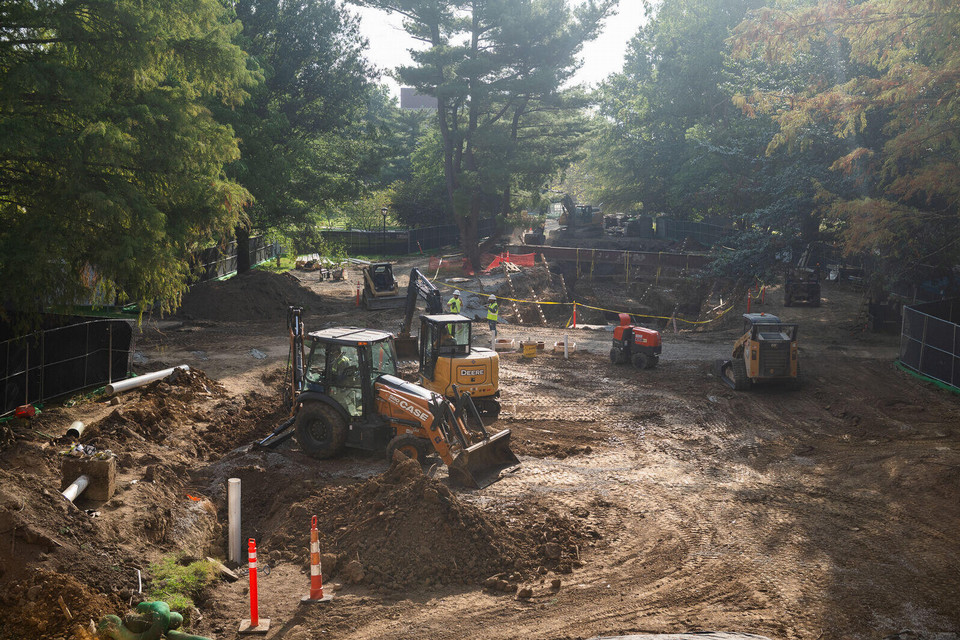
Pittsburg State University Construction Standards provide a comprehensive framework to ensure all campus construction and renovation projects meet consistent requirements for quality, safety, functionality, and long-term maintainability. Carpentry, Custodial, Electrical, Landscape, Occupational Safety, Painting, Plumbing, HVAC/R, and Network and Voice Cabling guidelines promote durable construction, efficient operations, safe work environments, and reliable building systems across the university.
Construction Standards
Carpentry Standards
Custodial Standards
Electrical / Electronics Standards
Landscape Maintenance Standards
Occupational Safety Standards
Painting Standards
Plumbing Standards
Refrigeration, Heating and Air Conditioning Standards
Network and Voice Cabling Standards
Additional Procedures & Information
Emergency Work Order Definitions
Custodial Emergencies
- The cleanup of broken glass.
- A ceiling leak dripping on the floor or equipment.
- Any substance on the floor that presents a safety concern.
- A stool, urinal, sink or floor drain is stopped up; creating a floor hazard.
- Any custodial work order that presents a safety concern.
Landscaping Maintenance Emergencies
- Irrigation system on during the day with no Physical Plant employee present.
- Debris on a campus street, sidewalk, or steps.
- Broken limbs or trees.
- Sink holes or any holes in the ground.
- Broken glass outdoors.
- Car accidents on campus where there is a chemical spill, broken glass, or car parts.
- Vandalism that poses a threat to life or limb.
- Snow and/or ice removal.
- Icy spots in front of doors or on steps.
- Icy spots in general (streets or sidewalks).
Trades Maintenance Emergencies
- Door glass is broken.
- Window glass that is broken out.
- Windows that will not secure which are on ground level or at a fire escape access. This is a security issue.
- Entrance doors that will not lock or unlock.
- Classrooms, labs or offices that will not unlock.
- Classrooms, labs or offices that have valuable items inside them that will not lock.
- Core changes that are required due to a breach of security.
- Roof leak that is dripping on valuable equipment.
- Roof leak where a potential safety issue is present.
- Any floor safety issue, such as tripping or opening in floor.
- Any other work that presents a safety concern for students, staff, general public or the building itself.
Electrical
- Anyone trapped in an elevator or any elevator not working.
- Any campus building reporting no electricity.
- Lights not working in classroom or office.
- Campus wide power outage.
- Receptacles not working in classroom that is needed immediately for teaching purposes.
- Fire alarm sounding in any building.
- Emergency, short notice or priority dig safe One-Calls.
Plumbing & Welding
- Any stool or urinal that is running continuously.
- Any time the smell of gas is present in any building.
- Any time the smell of sewer gas is present in any building.
- Any time there is no water to a building.
- When the sewer system, drains, stools or urinals are stopped up.
- When water is running on any electrical devices.
- When water is leaking through a wall, floor or ceiling.
- When there is no heat in the entire building or section of the building.
- When water is coming out of the ground.
- When the tunnel system on campus has a large amount of water in it.
- When any large cover plates for water meters, sewer manholes or irrigation valve box lids are missing or not on properly.
- When any faucet is leaking continuously.
- When the window wells are full of water.
- Any time dish machine is not working properly in Gibson Dining Hall or Overman Student Center.
- Loud noises coming from mechanical room.
Refrigeration, Heating & Air Conditioning
- Air conditioning not working in entire building.
- Loud noise coming from mechanical room.
- Loud noise coming from cooling tower.
- Cooler or freezer not working in Overman Student Center, Gibson Dining Hall or Heckert-Wells.
- Air conditioning not working in telecommunications rooms in Kelce (ITS).
- Air conditioning not working in main computer room in Kelce (ITS).
- Air conditioning not working in computer labs (Rooms 103, 104, and 105) Kelce.
- Air conditioning not working at KRPS studio at Grubbs
- Air conditioning not working at KRPS tower at Weir.
- Air conditioning or exhaust fan not working in Heckert-Wells, Room 207.
- Loud noise coming from air conditioning equipment located on outside of building.
Fire Extinguishers
Facility Operations provides appropriate type portable fire extinguishers as an institutional service. All fire extinguishers, except those of Auxiliary Services, are serviced without charge.
Service includes required recharging, monthly inspections, annual inspections, and testing according to governing regulations (NFPA, IFC, LSC, etc.). Both internal Pittsburg State University staff and qualified vendors are utilized to perform these inspections. Complete records are maintained for portable fire extinguishers.
For additional information regarding portable fire extinguishers, please contact the Custodial Maintenance Supervisor at extension 4787, or for emergency situations, call 911.
Pest Control
Insect and rodent control is accomplished by a regular routine maintenance program performed by contractors. Specific problems dealing with pest control should be reported to Facility Operations via extension 4777 or by submitting a work order request. The problem will then be referred to the pest control operator for specific treatment. Exceptions are rare emergency problems with rodents and bird control.
Some locations on campus are excluded from pest control treatment. Any area may be excluded from treatment upon request in writing from the department head to the Director of Facility Operations.
Confined Spaces
CONFINED SPACE OPERATIONS POLICY
Introduction
OSHA’s Final Rule 1910.146 concerning Confined Spaces and Permit Required Confined Spaces was published in the Federal Register Vol. 58, No. 9, on Thursday, January 14, 1993. Effective April 15, 1993, these rules and regulations became mandatory for employers using these enclosures at the workplace. Although public employees in Kansas are not directly covered by OSHA regulations, state statutes specify that if any aspect of safety and health is not covered by more stringent state law, then OSHA regulations apply and can be enforced by the Department of Human Resources, Division of Industrial Safety and Health/Kansas Department of Labor.
A confined space is any area that is large enough and so configured that an employee can bodily enter and perform assigned work and has limited or restricted means for entry or exit. These may include pits, silos, storage tanks, process vessels, vats, cupolas, furnaces, tunnels, degreasers, pumping stations, sewers, septic tanks, sewage digesters, utility vaults, boilers, pipelines, ditches, storage cyclones, tank cars, bins, and even small storage buildings and basement areas under certain circumstances.
Each confined space at a facility must be inventoried and evaluated for hazard type, such as asphyxiation, toxicity, oxygen content, flammability, or engulfment. If an employer has any confined spaces that have one or more of these hazards at his/her workplace, a “permit-required confined space program” must be written and followed. The written program must adequately cover issues such as permitting, training, rescue procedures, respiratory equipment, and monitoring equipment.
Definitions
Permit-Required Confined Space
A confined space that has one or more of the following characteristics:
- Contains or has the potential to contain a hazardous atmosphere.
- Contains a material that has the potential to engulf an entrant.
- Has an internal configuration such that an entrant could be trapped or asphyxiated by inwardly converging walls or by a floor that slopes downward and tapers to a smaller cross-section.
- Contains any other recognized serious safety or health hazard.
Hazardous Atmosphere
Atmosphere that may expose employees to the risk of death, incapacitation, impairment of ability to self-rescue, injury, or acute illness from one or more of the following:
- Flammable gas, vapor, or mist in excess of 10% of its lower flammability limit.
- Airborne combustible dust at a concentration that meets or exceeds its lower flammability limit (Note: This concentration may be approximated as a condition in which the dust obscures vision at a distance of 5 feet or less.).
- Atmospheric oxygen concentrations below 19.5% or above 23.5%.
- Atmospheric concentrations of any substance for which a dose or a permissible exposure is published in 29 CFR 1910 Subparts G and Z.
- Any other atmospheric condition that is Immediately Dangerous to Life or Health (IDLH).
Immediately Dangerous to Life or Health
Any condition that poses an immediate or delayed threat to life or that would cause irreversible adverse health effects or that would interfere with an individual’s ability to escape unaided from a permitted space.
Non-Permit Confined Space
A confined space that does not contain or, with respect to atmospheric hazards, have the potential to contain any hazard capable of causing death or serious physical harm.
Retrieval System
Equipment used for non-entry rescue of persons from permit spaces.
Inventory
Confined space facilities at Pittsburg State University fall into the following five categories:
- Steam tunnel distribution system
- Central power plant
- Mechanical rooms
- Cooling towers
- Sewage system
Except for the sewage system, none of the other areas currently meet the criteria outlined in the standard to qualify as a “Permit Required Confined Space”. The functions, procedures, and policies concerning these confined space areas are described below.
Steam Tunnel Distribution System
Steam is distributed through a system of tunnels beneath the campus. Pipes in the tunnels transport steam throughout the main campus. Temperatures of the pipes run as high as 300 degrees Fahrenheit (F) and, therefore, present a danger to anyone who is not trained to work in these tunnels.
The Facility Operations policy is to never allow a worker to negotiate a steam tunnel alone. Only experienced workers may service the steam tunnel. Each Facility Operations Supervisor is responsible for ensuring each of their workers is qualified to service these tunnels. Including: knowing where the exits are, where the access doors are, and having keys to get through these passages. Anyone not familiar with the tunnels runs the risk of being trapped in a dead end or a passage blocked by a locked egress. A person trapped in the tunnel could face serious consequences.
Because of building security, Facility Operations personnel must lock doors between the buildings and the tunnels to prevent unauthorized access. This policy prevents a dangerous situation for anyone without keys. Facility Operations, therefore, prohibits unauthorized persons from entering the tunnel systems.
The tunnel system also houses a 1 ¼” ID pipeline that carries natural gas to various facilities across the main campus. The pipeline is maintained in good condition and is securely mounted on the tunnel wall above walking level where it might be accidentally damaged by workers, transported equipment, materials, or tools. All employees in the Boiler Room Department and Plumbing Department shall be familiar with the valves necessary to turn off the gas supply in the Physical Plant as well as inline in the tunnel system.
Central Power Plant
The main campus is heated by steam that is produced at the Physical Plant by two natural gas-fired boilers and piped to buildings through the steam tunnel distribution system. Each building receives steam at a temperature of nearly 300 degrees F and at a regulated pressure of 60 pounds per square inch (PSI). Steam that has been used for heating is condensed in the system and circulated back to the boiler room. This condensate returns at approximately 180-190 degrees F and is reused as preheated water for additional steam generation.
Boilers are cleaned and serviced at least once a year (normally every spring). To accomplish this task, the boilers are first shut down, allowed to cool, drained, thoroughly flushed with water, and cleaned from the outside opening. No worker is allowed to enter a boiler for inspection/cleaning until it is thoroughly flushed, drained and support personnel are present to provide assistance.
Mechanical Rooms
The following mechanical rooms and basements on campus are equipped with a single entrance.
- Steam pipe complex under McCray Hall.
- Stem pipe complex under Whitesitt Hall.
- Mechanical room at Yates Hall, although there is a garden-level window.
- Mechanical room at Kelce Center, although there is a garden-level window.
Cooling Towers
Six buildings on campus are equipped with rooftop cooling towers which are large enough to allow a worker to enter through an access door. These units are generally serviced from the outside, except for once every spring when they are inspected and cleaned from the inside. However, during this time the towers shall be drained of all fluids, and the electrical power supply for each unit is locked out and tagged out according to regulations.
Water and Sewage
The sanitary sewer systems are considered “Permit-Required Confined Space” and no PSU worker is allowed to enter these areas. Any sanitary sewer issues at the PSU campus shall be brought to the attention of Facility Operations administration and coordinated with the City of Pittsburg, Public Works Department.
The University has adopted a policy of strict adherence to city pretreatment ordinances which specify substances approved for introduction to public sanitary sewer. A copy of the agreements between PSU and the Public Owned Treatment Works (POTW) are on file at the Facility Operations-Fire and Safety Office (620-235-4785).
Conclusion
Any change recommendation to the operating procedures for confined spaces on the Pittsburg State University campus or the introduction of any foreign atmospheric pollutants to the environment should be immediately reported to the Facility Operations-Fire and Safety Office (620-235-4785).
Departmental Billing
Materials Clearing
All work performed that is determined to be the responsibility of the department will be billed monthly through a clearing process. The charges may include, but are not limited to, materials, equipment rentals or contractor services if necessary, and overtime pay reimbursement if deemed necessary and/or appropriate. All materials and rental and/or contractor services will be billed at cost. Overtime reimbursement will be charged at a predetermined amount set by the Director of Facility Operations. All charges are billed to the departmental funding utilized on the work order request. Changes to the departmental accounts charged will need to be performed by the billed department.
Carpool Clearing
Carpool vehicle use and gas/oil charges are also billed monthly via a clearing process to departments according to the funding information provided and authorized by the department.
Department-owned vehicles that purchase gasoline and oil from the Facility Operations Garage will be billed the most current up-to-date prices for gasoline and oil via the clearing process according to the funding information provided and authorized by the department. Any other maintenance items will be charged at cost using this clearing process.
Department-owned vehicle maintenance requests made through the work order system will be charged using the Materials Clearing process.
FedEx/UPS Billing
FedEx and UPS invoices for the Pittsburg State University account are paid by Facility Operations and billed to individual departments via GUS Cloud expense reports. Charges are billed to accounts provided by departments during shipping.
Winter Storm Response Plan
Inclement Weather
Winter Storm Response Plan
Prepared: February 2010
Updated: March 2021
Notification of Winter Storms
Pittsburg State University will use all available sources to predict and track winter storms. Local television weather forecasts, the Weather Channel on cable television, and satellite information available on the internet will all be monitored closely. When severe weather is forecasted, the University also receives notification bulletins from the National Weather Service. During the nighttime hours, University Police will closely monitor street conditions due to severe weather conditions (snow, ice and windstorms).
If weather conditions appear hazardous or dangerous, the patrol supervisor will contact the Vice President for Administration & Campus Life no later than 4:30 AM. to consult about current conditions of the city streets, campus streets, University parking lots and sidewalks. In preparation for recommendation to the President, the Vice President for Administration and Campus Life shall make an assessment of weather conditions, including snow removal, streets and sidewalks, hazards to students and employees traveling to and from the campus and the ability to provide energy. The most accurate and dependable source will be used to determine the University's response.
Activation of Winter Storm Response by the Facility Operations Departmen
The Director of the Facility Operations Services and Grounds will direct and oversee the Department's response to winter storms. The Director will coordinate response plans with the CFO and Vice President of Administration, Landscape Maintenance supervisor and Custodial supervisor. Landscape Maintenance and Custodial supervisors will be responsible for the employees they are supervising during the winter storm response period.
When winter storms are predicted, the Director will notify appropriate supervisors who, in turn, will notify their employees of the possible severe weather and put them on standby for possible extended work hours or after hours call back.
If a winter storm occurs during normal hours of operations for the Facility Operations, all available equipment and employees will be deployed. Depending on the forecast of the strength and duration of the storm, the Director of the Facility Operations Services and Grounds may divide the Facility Operations work crews and send part of them home after their regular shift is completed to be called back on later shifts. The Landscape Maintenance supervisor may call employees in for earlier shifts and every effort will be made to evenly distribute the amount of hours worked among the available work force. We will ask for volunteers first and if we do not get volunteers than we will use our mandatory list to have employees come in to cover the early shift.
If a winter storm occurs after normal hours of operation for the University, the Facility Operations relies on information provided by University Police to activate the winter storm response. When roads, parking lots and sidewalks start to deteriorate during the night, University Police will call the CFO and Vice President of Administration and Director of Facility Operations Services and Grounds and give them the information at that time for us to determine to call out university personnel and private contractors. The severity of the storm will determine how many employees and contractors are to be called out before the start of the normal hours of operation.
Issue a Declaration of Inclement Weather and close the University
The Governor has delegated to the President the responsibility and exclusive authority to make a Declaration of Inclement Weather for PSU because of severe weather conditions. When a Declaration is issued by the President, he/she has the responsibility and authority to maintain essential services and provide for the protection of resident students and University property. Each area administrator (Vice President, Dean, Director, Chairperson and Area Supervisor) must determine their staffing requirements to ensure the maintenance of essential programs and activities.
Pittsburg State University will be considered closed from the time of the Declaration announcement until the indicated time that the University will reopen.
Benefits-Eligible Employees who perform essential services are expected to report to work for their regular schedule, are called in early or continue to work their regular schedule in accordance with the supervisor's instructions. Some examples of essential services include maintenance of building operations, clearing of walkways, streets and parking lots, student resident hall services and public safety.
Benefits-Eligible Employees who do not perform essential services are not expected to report to work if the Declaration is issued before the start of their regular work schedule. They are expected to leave work as soon as possible when a Declaration is issued after they have reported to work.
If the President issues a Declaration of Inclement Weather, it is important that essential employees are able to perform their duties so that the campus can be reopened as soon as possible. Non-essential employees should leave campus when a Declaration of Inclement Weather is issued and not return until the University is reopened. This will ensure that essential employees responsible for clearing sidewalks, parking lots, streets and other University property have unobstructed access to these areas along with safety and efficiency in working the areas.
The CFO and Vice President for Administration will contact the President before 5:00 AM. to begin discussions regarding potential closure of the University. The President will seek additional input from the Provost and the Vice President of University Advancement.
By 5:30 AM. the President will make the decision to: a) Issue a Declaration of Inclement Weather and close the University, b) Keep the University open but cancel classes, or c) Keep the University open and classes in session. See Inclement Weather Policy for University Employees.
When a decision has been made, the President shall call the Director of Public Relations or a designee who will notify University constituents as follows:
- Update the University's website.
- Notify the news media (television and radio stations) in Pittsburg area
- Notify the President's Council.
- Notify all sponsors of campus events. Notification will be sent in a timely fashion to media of changes in the University Calendar.
The CFO and Vice President for Administration shall notify the Crisis Management Director, The Director of Facility Operations Building Trades, the Director of Facility Operations Services and Grounds and the Manager of Telecommunication Services advising them of the decision that has been made. In consultation with these directors, the following actions will occur:
- Notify students, faculty, and staff by e-mail.
- Notify students, faculty and staff by text message.
- Contact snow/ice removal contractors as necessary.
- Schedule staffing levels as needed for clearing sidewalks, buildings steps, ramps etc.
- Record appropriate inclement weather message on the President's Office and main University telephone numbers.
During normal working hours, the same procedures to decide whether to dismiss employees early or to cancel afternoon or evening classes will be followed. The President's Office together with the Vice Presidents shall be responsible for disseminating information to campus offices on weather emergencies through Mr. Bulk-E, the "RAVE" alert system and/or other established measures.
Responding to Winter Storms
The Facility Operations will respond to all winter storms that take place during regular work day hours and after regular work hours. Priorities and work schedules will be set depending on the time and strength of the storm and what events are happening on campus during the storm. These priorities will have to be determined by information that we have such as schedules, calendars and information we get from departments.
The first priority for the Facility Operations and University Housing under typical circumstances is that the Landscape Maintenance, Custodial and Housing Maintenance departments will clear sidewalks, ramps and stoops to Gibson dining hall for on-campus student residents. At the same time they will also be clearing sidewalks, ramps and stoops at each campus building and sidewalks that lead to parking areas. The Landscape Maintenance department will also be clearing Crescent Drive west of Russ Hall. The Landscape Maintenance department, Custodial department and Housing Maintenance department will apply ice melt and/or salt/sand mixture prior to the storm if rain is not preceding the snow or ice storm. After they have cleared the snow, they also will apply ice melt and/or salt/sand mixture to areas that they have cleared.
If the storm happens before the work day begins, the outside contractors will begin clearing Lindburg and Cleveland streets and priority parking lots before employees come to campus. The City of Pittsburg is responsible for clearing Broadway, Joplin, Ford, Homer, Elm, and Locust streets. The parking lots to be cleared first by contractors will be the Grubbs lot, Gold lot, Lindburg lot east of the Facility Operations, Brown lot, Axe Library delivery dock, and Shirk lot for University Police and the KTC lot. Employees are encouraged to park in one of the priority parking lots after they have been cleared when showing up to campus that morning. This will allow safer more efficient snow clearing for Facility Operations and contractor personnel. If the streets and parking stalls have been cleared employees can park in the street parking stalls; if not please park in priority parking lots.
The second priority for parking lots will be the Student Recreation Center, Tyler Research Center, Weede, McPherson, Kelce, Alumni Center, Timmons Chapel, the delivery entrance drives to Gibson Dining Hall and Bryant Student Health Center.
The third priority for parking lots will be all the housing lots. Because of students parking in these lots it will be hard to clear these lots safely and efficiently. The Facility Operations and contractors will clear driving lanes in these lots to the best of their ability.
We will lose some parking stalls in the parking lots and on the street for piling the snow. Handicapped parking stalls and ramps will be cleared immediately. When the snow has been cleared in the priority lots and streets, the Facility Operations and contractors will start to remove the piles of snow with loaders and dump trucks. The Facility Operations will continue to clear and treat sidewalks during all these processes.
If the storm hits during regular working hours and the University remains open, the Facility Operations will clear sidewalks, ramps and building entrances. Parking lots and streets will not be safe to clear while cars are parked in those areas. If the Inclement Weather Policy is put into effect during regular working hours, non-essential personnel need to leave the University as soon as they can so the Facility Operations can begin administering the response plan efficiently for the re-opening of the University.
Pretreatment of Sidewalks and Parking Lots
The Facility Operations is to pre-treat sidewalks and parking lots with a dry mixture of salt/sand and/or ice melt. The pretreatments are applied using spreaders mounted on gators and trucks. The Landscape Maintenance supervisor consults with the Director of Facility Operations Services and Grounds and various weather information systems before making the decision that pretreatment is necessary or advisable. Once a decision is made to pre-treat, a schedule is then established to ensure that areas get pretreated properly and timely.
When the forecast calls for rain before the freezing participation, pretreatment is not initiated until rain has stopped. The application of pretreatment materials prior or during rain fall would only be washed off sidewalks and parking lots.
Pretreatment applications continue throughout the clearing process especially on sidewalks for pedestrian safety.
Facility Operations Department Work Force
The Landscape Maintenance department will be the employees first placed into service when responding to winter storms. Depending on the storm's strength and duration, this crew may be divided into two groups to provide early service to the University.
The Custodial department will also be responding early to clear building accesses such as stoops, stairs and ramps with brooms, shovels, snow blowers and ice melt.
Snow Removal Equipment Landscape Maintenance Department
Most of the University's snow removal equipment used in response to winter storms is under the control of the Landscape Maintenance Department of the Facility Operations. The use of equipment when responding to a winter storm will be at the direction of the Landscape Maintenance supervisor.
Use of Private Contractors
There will be times when a storm's strength and duration is more than the Facility Operations can clear. At that time private contractors will be available to assist the University. With limited resources of manpower and equipment, when a winter storm with greater strength and duration ascends, it will become necessary to employ private contractors to assist in the clearing activities in order to keep the University open or to ensure the re-opening of the University as soon as possible. When snow accumulation is expected for three to four inches or more, outside contractors will be brought onto campus. The Facility Operations has contracted, through the Purchasing Office, contractors to assist in these clearing activities. The contractors' responsibilities are primarily clearing the larger parking lots - Cleveland Street, Lindburg Street and McPherson Drive, as the Facility Operations takes care of sidewalks and smaller parking lots and drives.
Contact Facility Operations
PSU Directory
facilities@pittstate.edu
620-235-4779
Recycling Services
recycling@pittstate.edu
620-235-4977
E-Waste
ewaste@pittstate.edu
620-235-4977
Carpool
carpool@pittstate.edu
620-235-4786