
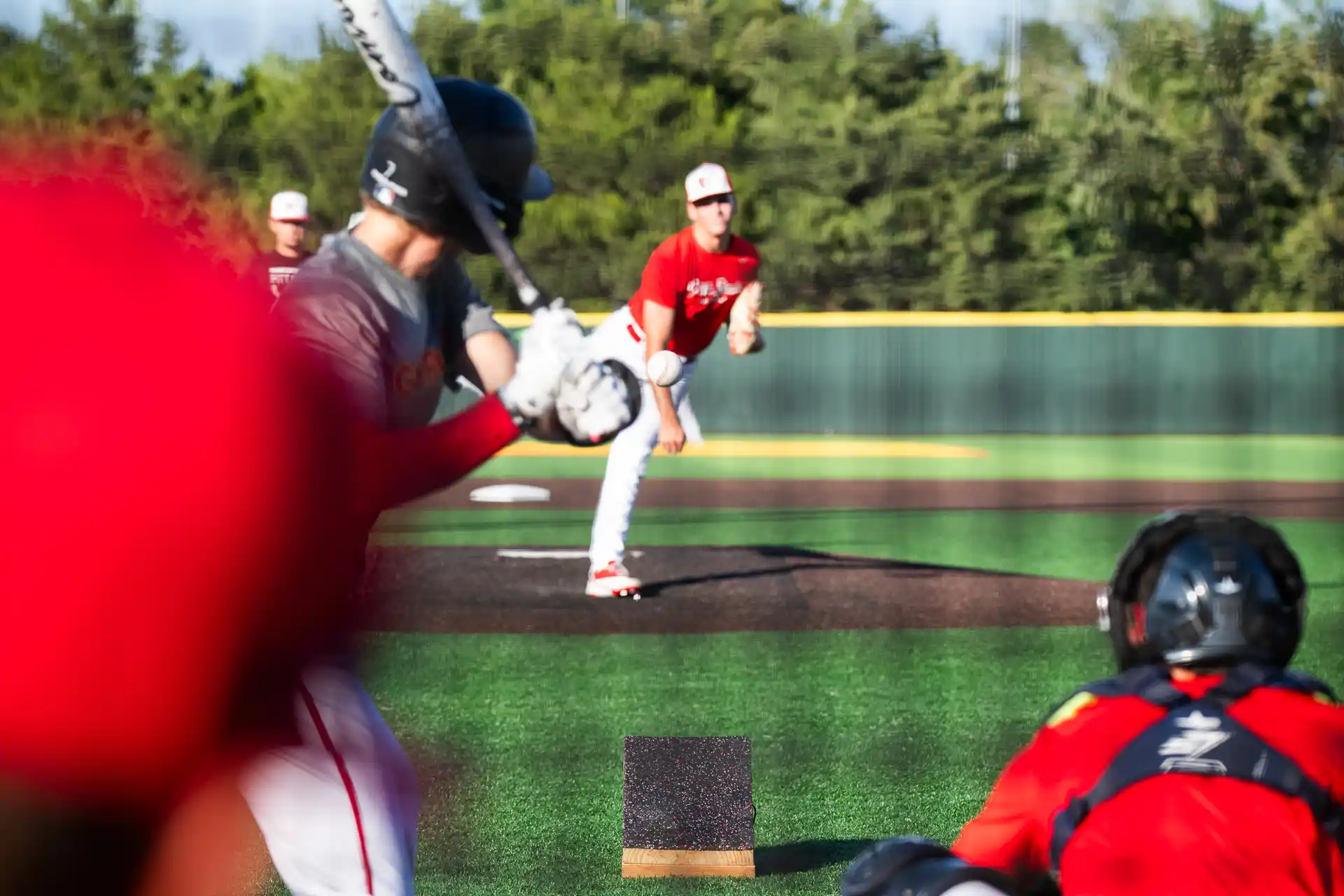
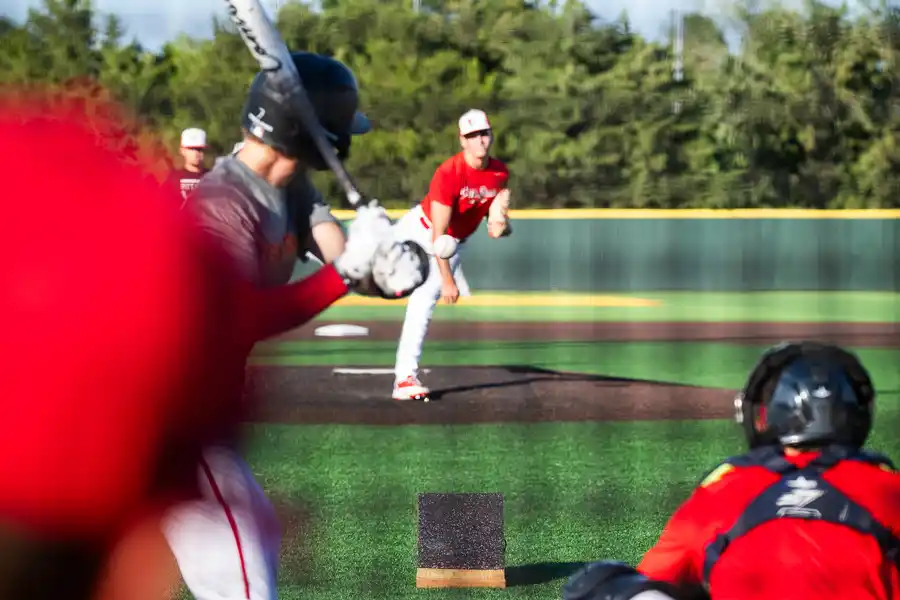
On a typical day, Pitt State pitcher Ryker Curry can be found throwing bullpen sessions alongside his teammates. But this year, he's also conducting research and helping build a player development system designed to improve both performance and health for every pitcher on the Gorillas’ roster.
His graduate level research project in Exercise Science is a collaboration with Associate Professor David Boffey in Health, Human Performance and Recreation; Assistant Baseball Coach Kody Sindelar; and Strength and Conditioning Coach Beto Montero.
Curry’s project combines cutting-edge sports science with baseball analytics to create individualized development plans for each of the team's 32 pitchers. While similar approaches have become common at the Division I and professional levels, they remain relatively rare in Division II athletics.
"A lot of technologies have really exploded in baseball," Sindelar said. "A lot of your bigger schools have pitching labs with technology and data. We were able to develop our own version of it here at Pitt State because we have the perfect combination of people and facilities to take it on.”
A personalized roadmap
The idea began when Curry, who earned an undergraduate degree in Exercise Science in May and has his eye on completing his master’s degree in 2028, visited with Boffey about combining his academic interests with his experiences as a collegiate pitcher.
"He also talked with our coaches about how we could work together to evaluate pitchers and then help improve performance, improve health and wellness, and evaluate injury risk for each one of them,” Boffey said. “That collaboration between the Strength and Conditioning program, Gorilla Baseball, and HHPR has been very important.”
Their objective: provide each Pitt State athlete with a personalized roadmap rather than a one-size-fits-all training plan.
"Each person’s anatomy and physiology is unique. Each person’s response to strength and conditioning is unique. We want to improve performance by giving each pitcher specific tools and goals rather than just guessing, rather than just having them all do the same thing," Curry said. "The end goal is to have better, healthier athletes, get more wins, and ultimately get to the World Series."
How it works
For the study, pitchers have been undergoing an extensive series of evaluations, and coaches have been collecting a range of data.
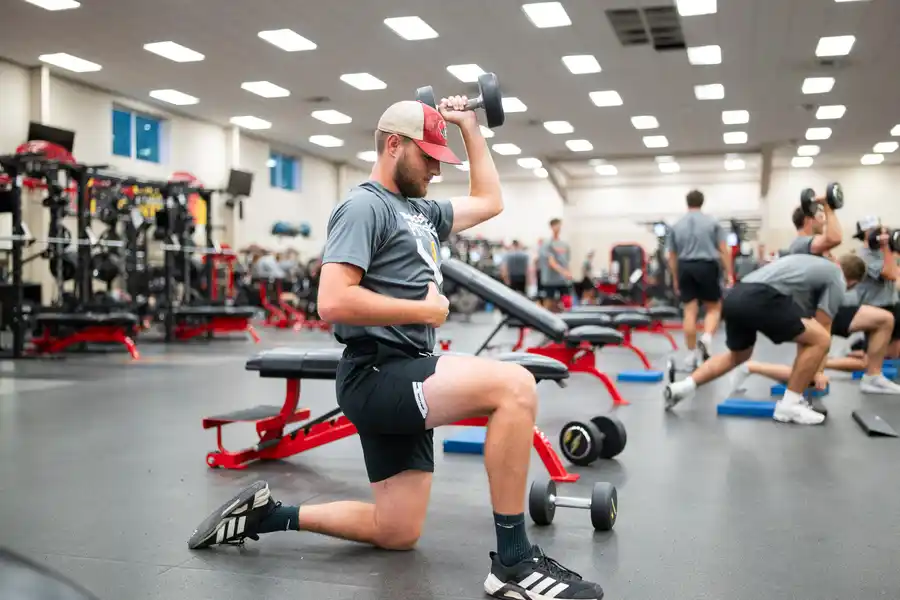
At the Plaster Center, Montero — who spent last summer with the Atlanta Braves and brought what he learned back to Pitt State — spent a month building the pitchers to a base level of strength and speed.
“Sometimes when you test people right away, they are not ready,” he said. “We want to test safely, and get a baseline for everyone at the beginning of the semester.”
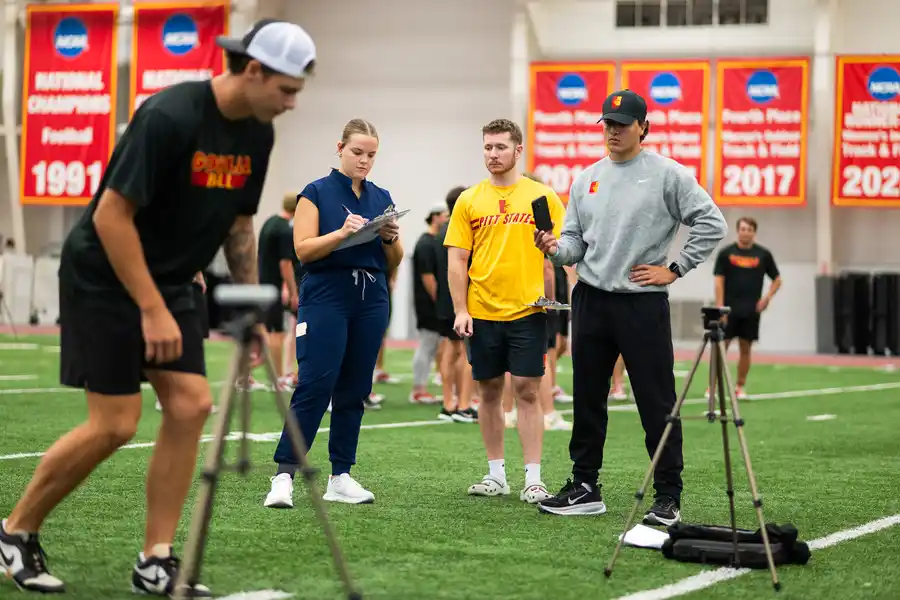
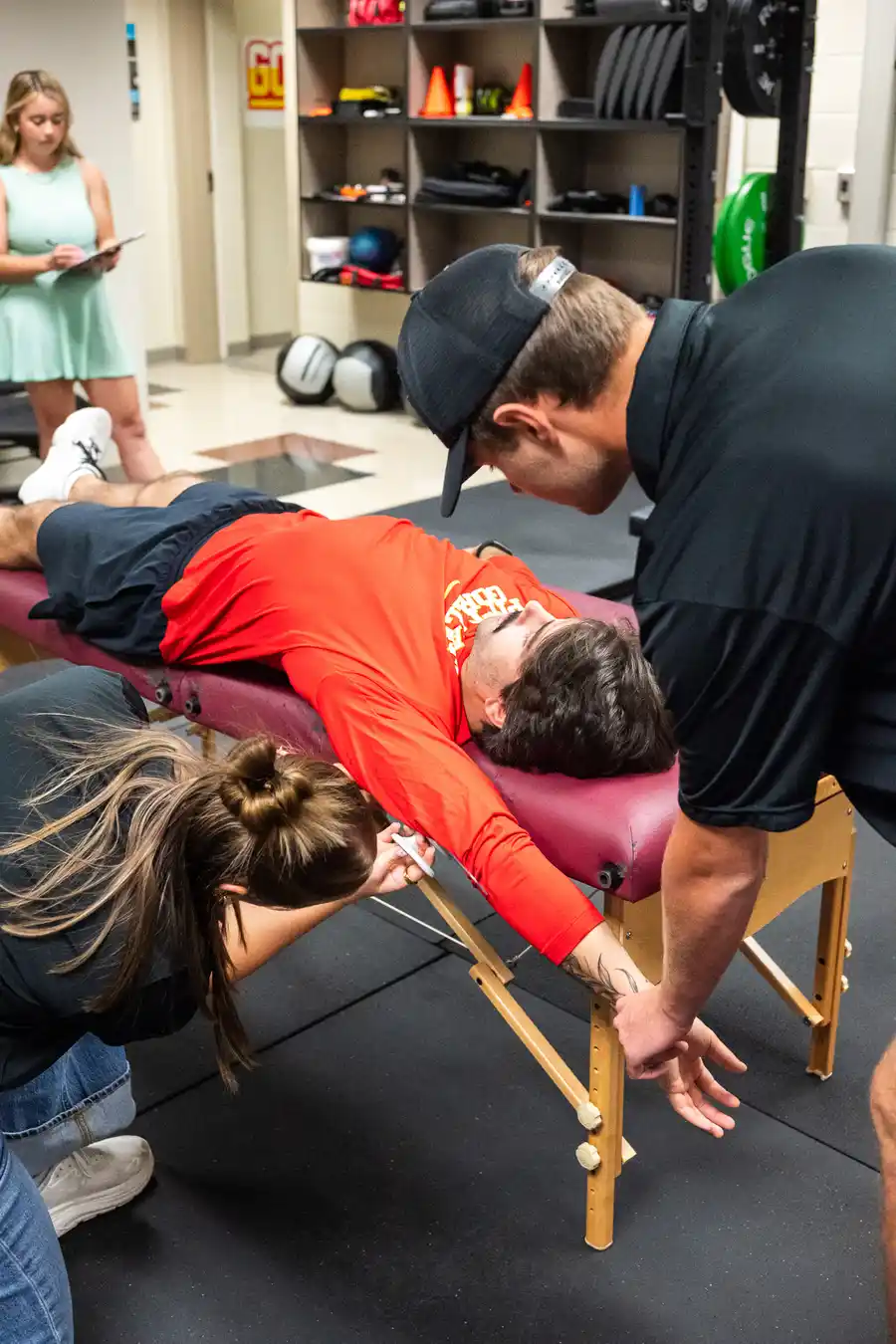
In the Human Performance Lab, Boffey and Curry have been collecting information on body composition, mobility, movement patterns, strength, and more.
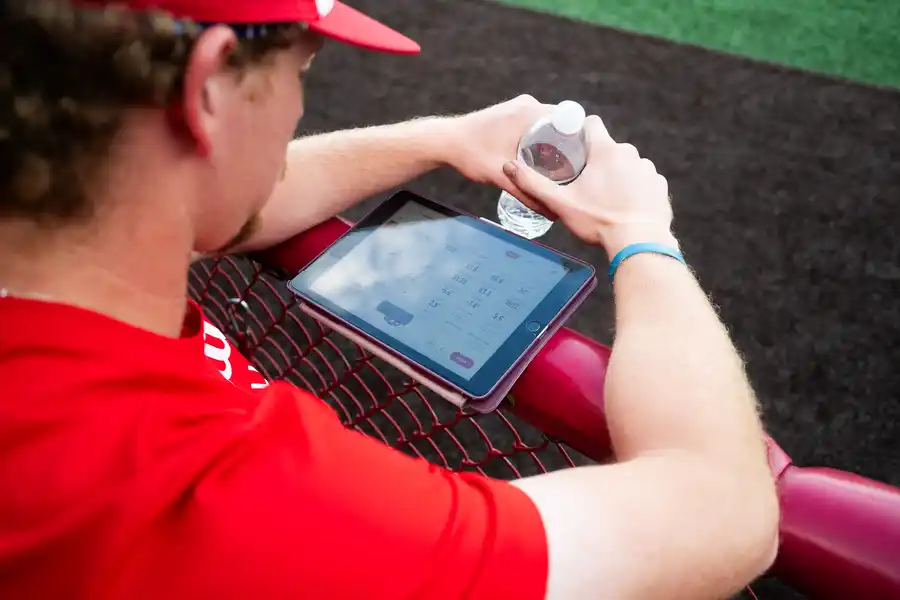
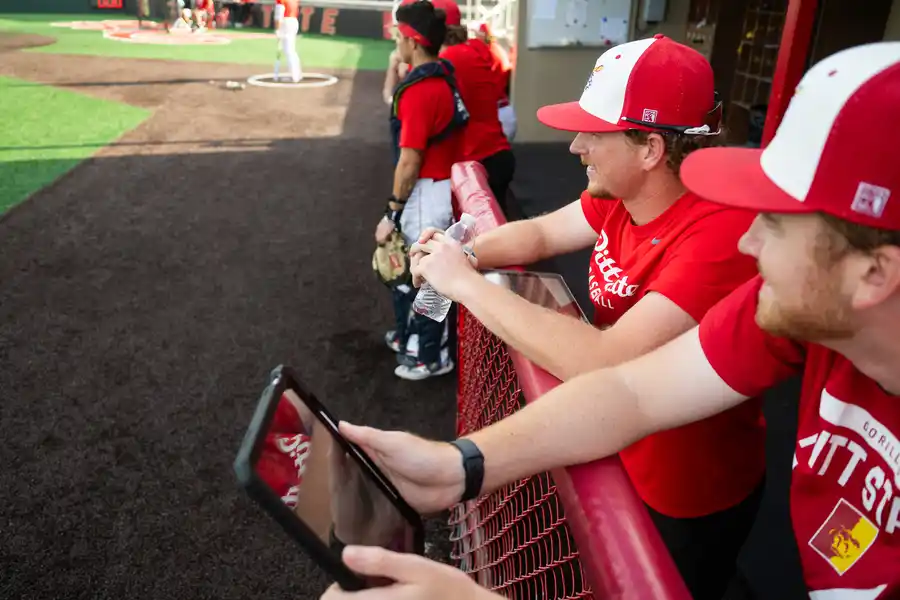
During games at the Gene Bicknell Sports Complex, coaches use a Rapsodo ball flight monitor and an iPad to record how each pitcher releases a baseball, how it moves through the strike zone, and where it crosses the plate.
The data is then combined to identify trends and help coaches and strength staff make informed decisions about workload, injury prevention, and player development.
"We thought if we can find an area of weakness in pitchers that we feel has a direct correlation to performance, we'd attack those weaknesses," Sindelar said.
Player Development Model
For Curry, the challenge has been transforming thousands of data points into information players and coaches can use.
"I have a huge spreadsheet of all the numbers," Curry said.
To make the information more accessible and visual, Curry developed a personalized report for each pitcher that resembles a baseball card. The reports use a red-yellow-green system to highlight strengths and areas needing improvement.
"Green means you're good, yellow means you could use some work, and red means an area you need to really focus on," Curry said.
The system, which the team refers to as a "Player Development Model," recognizes that successful pitchers come in many forms.
"People often talk about speed when it comes to pitchers," Boffey said. "Pitchers may get the ball across the plate at the same speed, but how that ball moves is based on their anatomy, their physiology, and how they themselves move."
Likewise, Sindelar noted that velocity is only one part of the equation.
"We have some guys who are very successful where velocity isn't the main driving force," he said. "Their skill is elite command, being able to throw the ball where they want it, along with having quality secondary pitches."
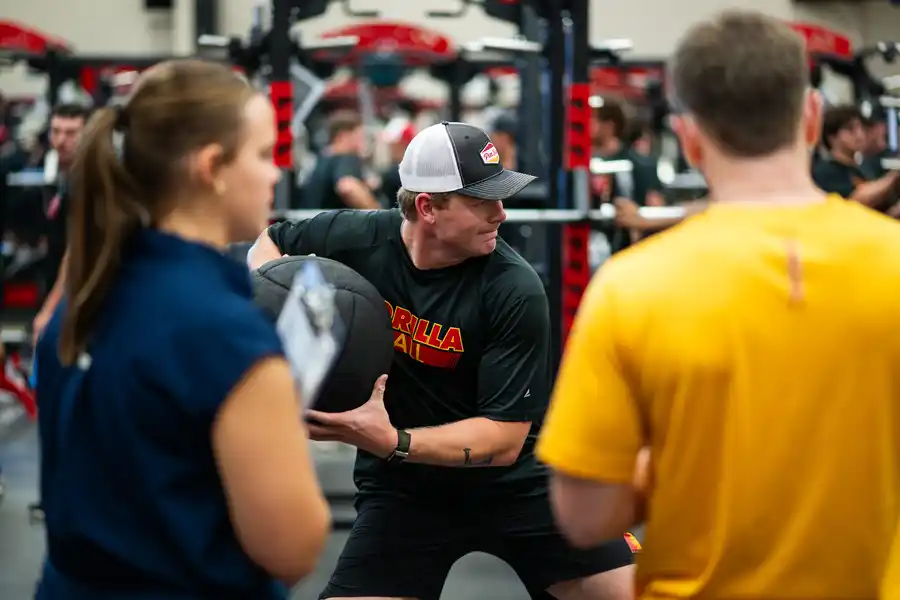
Boffey said measures of strength and explosive power, such as medicine ball throws, show strong relationships with pitching velocity. Other areas, including mobility and force production, can help identify potential injury risks before they become problems.
The individualized approach allows coaches to tailor training programs to each athlete's specific needs rather than prescribing identical workouts for every pitcher.
"Each player is different," Curry said. "The training needs to be specific to what each player needs."
Now and in the future
Montero sees this project as a great way to bridge the gap between the Exercise Science program on the academic side and the Strength and Conditioning program on the athletic side.
“Everyone will benefit from that,” Montero said. “It is the application of what they’re learning in the classroom, and if we’re able to help the future of strength coaches, PTs, and so on, it will make them better and our program better.”
As for Curry, his immediate goal is helping his teammates succeed.
"We're basing this model on what private facilities, DI programs, and pro organizations are doing," he said. "The gold standard is individualized training."
But the project also is giving Curry valuable professional experience — he dreams of a career in baseball analytics and player development.
"I’d love to work with pro organizations," he said. "I'm hoping to be able to present this to an organization and say, 'This is what I've done, and I can do it for you’."
Sindelar believes it's possible.
"Ryker is a special young man and has a really bright future," the coach said.
Learn more about Exercise Science at Pitt State: