Campus
Academics

State and local leaders, economic development professionals, educators, and business representatives got an up-close look at the many ways the university is helping to drive growth.
Attendees saw firsthand how Pitt State supports the region through a workforce pipeline, applied research, STEM education, and collaboration with economic development.
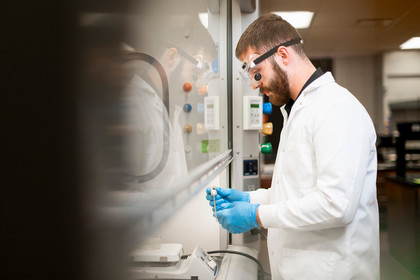
At Tyler Research Center, they learned about the National Institute for Materials Advancement (NIMA) and viewed construction progress on the university's new prove-out facility, then toured the nationally recognized Plastics Engineering Technology program in the Crossland College of Technology.
Together, the three assets create a complete workforce ecosystem: The Plastics Engineering Technology program educates and trains students; NIMA engages those students in cutting-edge research and industry partnerships; and the prove-out facility will provide a place where discoveries can be scaled, tested, and commercialized alongside industry partners.
For Southeast Kansas, that means a stronger pipeline of highly skilled workers, greater support for existing manufacturers, attraction of new technology-based industries, and increased economic competitiveness in advanced materials and manufacturing sectors.
"Pittsburg State University is deeply connected to the future of Southeast Kansas," President Thomas Newsom told attendees. "Our mission is not only to educate students, but to ensure they have opportunities to succeed while meeting the workforce and economic needs of our region."
The university's academic programs provide the foundation for specialized training and research opportunities.
“Our faculty include professors with valuable industry experience, professors who have earned international awards in education, and three who have been recognized among the top 2% of researchers worldwide,” noted College of Arts & Sciences Dean Chris Childers.
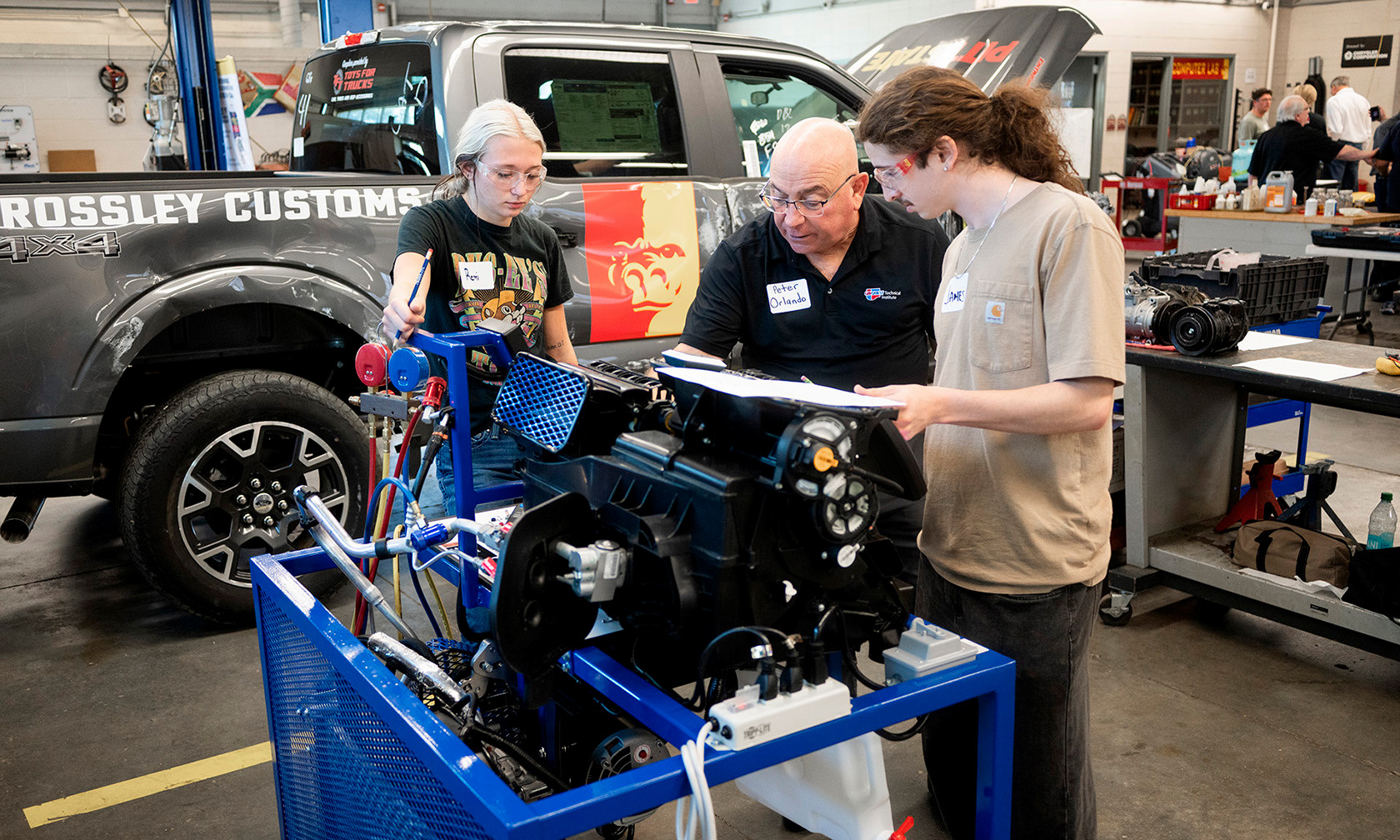
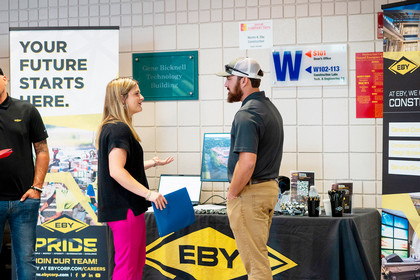
In Crossland College of Technology, the tour coincided with the annual Company Days, which annually draws industry representatives from across the country for the chance to connect with prospective hires in Construction Management and Engineering Technology; 2-year Electrical Technology; Environmental and Safety Management; Wood Product Manufacturing; Graphic Communications; Automotive Technology; Diesel & Heavy Equipment; Electronics Engineering Technology; Manufacturing Engineering Technology; Mechanical Engineering Technology; and Plastics Engineering Technology.
Tour attendees also learned about planned program expansions in several STEM programs that will help meet emerging workforce demands — programs like Criminal Justice, which soon will have state-of-the-industry academic space in the new Kansas Bureau of Investigation building being built at the east edge of campus, and Cybersecurity, which will have expanded lab space in the soon-to-be renovated Yates Hall.
The theme of career readiness was reinforced by Lisa Riedle, dean of the Crossland College of Technology.
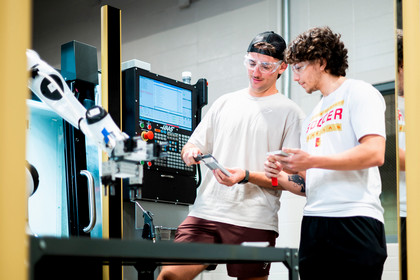
"The university’s longstanding motto, ‘By Doing Learn,’ together with internships, industry partnerships, advisory boards, and applied learning experiences — that all gives our students incredible real-world experience before they even get to graduation,” Riedle said.
The college also continues to grow transfer pathways through expanded 2+2 agreements with community colleges, creating additional opportunities for students to pursue technical and engineering-related careers close to home.
An expanded footprint for academic programs like Diesel & Heavy Equipment, for which a planned $20 million facility will provide laboratory and training space, will bolster career readiness.
Research is another area in which Pittsburg State is creating measurable economic impact, tour attendees learned.
“We engage students in meaningful research experiences in numerous program areas while supporting industry innovation,” said Associate Vice President for Research and Innovation Ram Gupta.
The university’s annual Research Colloquium now includes participation from university students, area high school students, and regional community colleges. It introduces young scholars to research while creating connections that strengthen the regional talent pipeline.
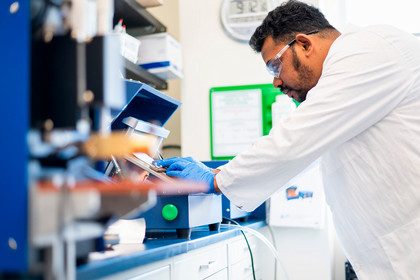
At NIMA, students work alongside faculty and industry partners on applied research projects that address real-world manufacturing challenges. The work has resulted in publications, patents, grant funding, and innovations that directly benefit business and industry.
The university also was awarded distinctive national recognition from the Carnegie Foundation; it is among just 33 universities to earn dual designation for student access and opportunity in addition to research activity.
Economic development extends beyond research and workforce training.
Wes Streeter, associate vice president for economic and community engagement, which includes the Kansas Small Business Development Center at Pittsburg State, highlighted the SBDC’s role in helping entrepreneurs and small businesses succeed across the region.
This fall, the center relocated to the first floor of the historic Besse Hotel, improving accessibility and visibility for clients from across Southeast Kansas who seek business assistance.
"Pittsburg State's impact extends far beyond the boundaries of campus and far beyond the boundaries of Pittsburg,” he said.
Whether preparing future engineers, supporting advanced manufacturing research, helping small businesses grow, strengthening STEM education, or building partnerships throughout Southeast Kansas, the university is serving as a catalyst for opportunity and economic progress.
For tour participants, the message was clear:
Pittsburg State University is helping to shape the economic future of Southeast Kansas, one partnership, one innovation, and one student at a time.