

Longtime educator and former Kansas Commissioner of Education Randy Watson will take on the role of the interim dean of Pittsburg State University’s College of Education starting Oct. 1.
“The future of our schools depends on our ability to attract talented people to education, prepare them exceptionally well, and continue supporting their growth throughout their careers,” said Provost Susan Bon, who since 2025 has been serving as the interim dean.
Bon noted that Watson understands those challenges from virtually every perspective — teacher, principal, superintendent, state commissioner, higher education faculty member, and parent.
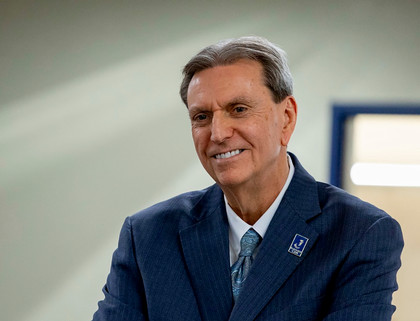
“Just as importantly, he knows Kansas. He knows our schools, our communities, and the people who lead them,” Bon said. “That combination makes him uniquely positioned to help Pitt State reimagine how we serve educators and school districts across our region.”
Pittsburg President Thomas Newsom noted that Pitt State has played an important role in preparing educators for generations.
“Our responsibility now is to make sure we're preparing the educators our schools will need for generations to come,” he said.
Giving back
Watson, a native of Coffeyville and current resident of McPherson, spent 45 years in education, retiring in May after 11 years as Kansas Commissioner of Education. His wife, Debbie, is a retired teacher and administrator, and his daughter, Melissa, is a teacher in Kansas. Both of his uncles are graduates of Pitt State and both were longtime educators.
He holds a bachelor’s in history, a master’s in educational administration, and a doctorate in education, all from Kansas State University.
He taught and coached in Twin Valley and Andover, was an administrator in Concordia and McPherson, was an assistant professor at Kansas State University, and was an adjunct professor for Wichita State and Baker Universities. He is founder and CEO of Sunflower Leadership Consultants, a company dedicated to empowering educational institutions and leaders with expert consulting services that drive meaningful change.
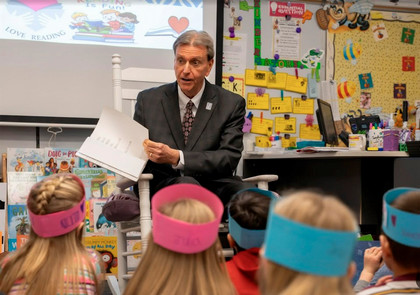
In 2015, Watson traversed the state during his “Kansans Can” tour and listened to business leaders, parents, students and educators about what Kansas wanted from its education system and what a successful high school graduate would look like. It was more, they told him, than a test score.
Student success during Watson’s tenure included the record-breaking 90.5 percent high school graduation rate in 2025. He led numerous impactful educational initiatives, including the State Board’s literacy and school improvement initiatives and the creation of a leadership program for superintendents.
“I’m a native Kansan and care a great deal about students and teachers,” he said. “I’m excited and honored to be chosen for this role and look at it as a way to give back to a region of the state that helped shape who I became, to help an institution that understands its regional mission is to serve educators and students, and to strengthen that educator pipeline.”
Tradition
Pittsburg State University has a long tradition of preparing teachers, dating back to its founding in 1903 as the Auxiliary Manual Training Normal School, a teacher-training institution established to educate future educators for Kansas schools.
In 1923, the institution became the Kansas State Teachers College of Pittsburg, reflecting its primary mission of teacher preparation, which remained central even as the university expanded into other academic fields.
The College of Education continues that legacy today, serving more than 1,500 students each year in a variety of programs offered in three departments: Health, Human Performance and Recreation; Psychology and Counseling; and Teaching and Leadership.
Its educator preparation programs are accredited by the Council for the Accreditation of Educator Preparation and emphasize classroom experience, licensure readiness, and practical teaching skills.
“Pitt State has a remarkable history of preparing educators, and I'm excited about building on that foundation while asking what the next generation of teacher and leader preparation needs to look like,” Watson said.
Challenges
He will face challenges. The pipeline into teaching has weakened, with interest, preparation, prestige, and satisfaction at the lowest levels in 50 years. Those trends make the work of Pitt State’s College of Education increasingly important.

A 2026 analysis by the Learning Policy Institute estimates that more than 425,000 teaching positions are either vacant or filled by teachers not fully certified in their assignments. Kansas is no exception. School districts across the state are working to fill critical positions, creating strong demand for qualified, licensed educators. As retirements and workforce turnover continue to affect schools, the need for well-prepared educators remains strong.
“Those realities create an opportunity for Pitt State to think differently about whom the College of Education serves and how it serves them,” Watson said. “Education is changing, and the way we prepare educators has to change with it. We can't simply prepare teachers and school leaders for the schools we had 20 years ago. We must prepare them for the students, classrooms, technology, workforce expectations, and communities they will encounter tomorrow.”
Leadership style
The first thing he plans to do: to listen and collaborate.
“I want to listen, to understand the traditions and the issues that faculty, staff, students, and school partners value most about the college – that's core,” he said. “What do they see as potential? What do they see that the college could do better?”
“My role is bringing people together in partnerships to remove barriers, to challenge everyone to high standards, and to play a role in advancing the university’s mission.”
“What I do well is bring people together, ask questions, help them determine shared priorities of what do we agree needs to be moved forward, and then moving it forward in a meaningful way.”
To do that, he said, will require deepening partnerships with area schools and communities, to support faculty, and to consider each student enrolled a major served by the College of Education as an individual with unique needs.
“I am excited to get started!”