Freshman enrollment at Pittsburg State University continues its six-year climb — this time with a 7.4 percent leap over 2025.
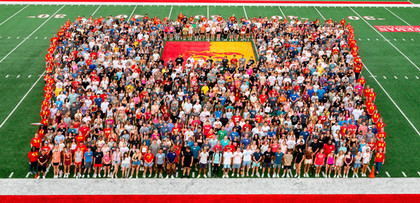
Last year's freshman class was 1,036 — also a climb over previous years — while this year's freshman class is 1,113.
Over the past three years, the university has focused on removing barriers that prevent students from persisting to graduation, partnered with high schools and community colleges to create enrollment pipelines, launched the Great Gorilla scholarship program to reduce the cost of attendance, implemented an aggressive awareness and recruitment system, and opened new facilities to attract prospective students in strong-enrollment programs.
“Despite early signs of the enrollment cliff and demographic changes, undergraduate enrollment at Pitt State is up again this year,” said Karl Stumo, vice president for enrollment management and student success. “Every new student we bring to campus and to Pittsburg represents a lot of work promoting the value of higher education and Pitt State specifically.”
The enrollment cliff refers to the significant decline in the number of traditional college-age students, driven largely by lower birth rates since the recession of 2007-09, resulting in increased competition among colleges and universities for a shrinking pool of prospective students.
Stumo said the university remains the best value in the state.
“Our affordable degrees combined with the experience and professional network our students build while they are in college are unmatched,” Stumo said.
Overall enrollment at Pittsburg State University dipped slightly to 5,766, down from 5,803 last fall. This decrease is driven entirely by enrollment in graduate programs and by international student enrollment.
A new focus on graduate enrollment is underway. Over the last year, the university reestablished a graduate recruitment office and invested in additional marketing activities to increase awareness and interest. All graduate programs are under review by leadership to ensure they meet current industry needs and are in demand.
“A graduate degree is an investment,” said Susan Bon, provost and executive vice president for academic affairs. “It’s an investment of money, but also of precious time and energy – often for working professionals. We must provide the programs that bring value, in ways that can fit into their lives.”
President Thomas Newsom, who just completed his first year at Pitt State, said the university's mission has remained consistent since its founding: to make lives better.
“We do that with practical degrees that produce leaders and develop careers that serve our region and the people who live here,” Newsom said. “We work very hard to stick to that mission and provide the value our region and state needs.”
Systemwide
Systemwide, preliminary census day figures show a slight decrease in enrollment across the state’s public higher education system.
The state’s six public universities saw a .7 percent increase in headcount. Community colleges declined by 1.9 percent and technical colleges by 6.8 percent.
"After three years of growth, our system is experiencing flat enrollment this fall, with uneven results across sectors and institutions,” said KBOR Chair Alysia Johnston. “The Board remains focused on ensuring that education beyond high school remains affordable and accessible for Kansans and that students who enroll in our system achieve success in college and after graduation.”