
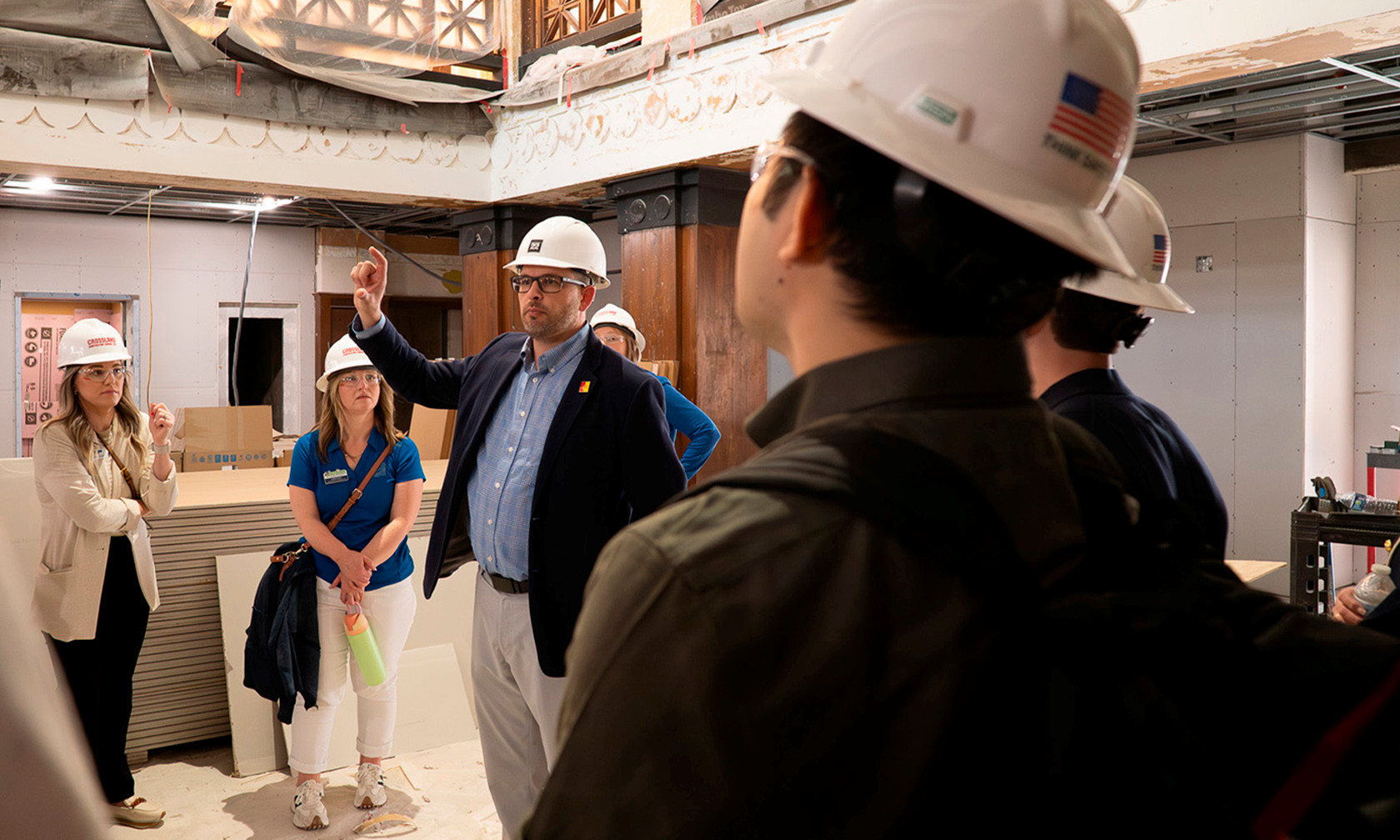
What does it look like when a university and a community grow together by design? Leaders from Aberdeen, South Dakota, traveled all the way to Pittsburg this week to find out.
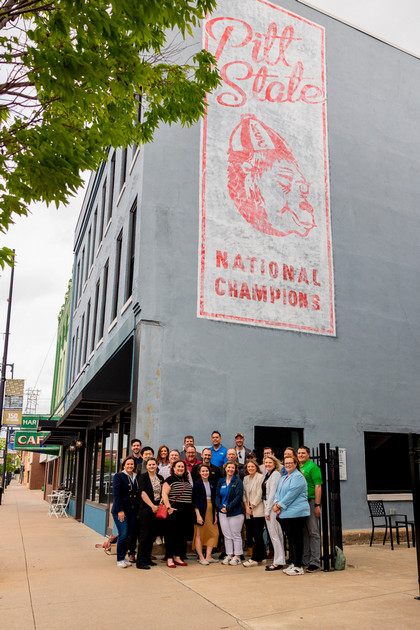
Pittsburg State University, the City of Pittsburg, and the Pittsburg Area Chamber of Commerce hosted a delegation of city, business, and higher education leaders from Aberdeen and Northern State University for a multi-day visit focused on learning how strong partnerships between a university and its community can drive economic development, revitalize downtowns, and improve quality of life.
The group traveled by bus 20 hours round trip to see firsthand how Pitt State’s collaborative approach has reshaped the community.
A shared story, different chapters
Aberdeen and Pittsburg share many similarities. Both are midwestern regional hubs, both founded in the first few years of the 1900s. Both are anchored by a Division II university that began as a “normal school” (teacher training college) and remains a key economic driver.
Both communities face similar challenges related to housing, workforce development, and aligning university growth with city needs — making Pittsburg an ideal place to learn what’s possible.
“We are at the lower end of the learning curve,” said Heath Johnson, an Aberdeen realtor and volunteer chairman of the city’s Community Foundation. “You are at the top end.”
Seeing collaboration in action
Amber Schwab, public information officer and economic development manager for the City of Aberdeen, said a grant provided the opportunity for their group to choose a community with a strong town-gown relationship that could serve as a model. A conversation with a former Pittsburg journalist made them realize that Pittsburg was exactly the community they were hoping to find.
During their visit, the delegation toured several signature projects that illustrate how entities work together to stack funding, align priorities, and maximize impact.
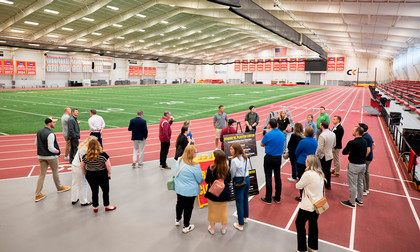
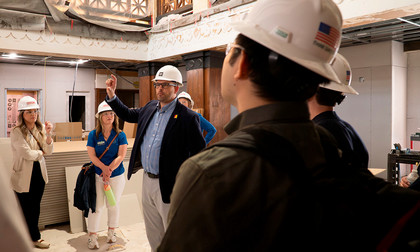
Stops included the Plaster Center, the university’s new outdoor track, the Crossland Technology Center, and the R&D Park currently under development on the east edge of campus. The group also spent time downtown exploring Gorilla Rising initiatives and Block22 at Fourth and Broadway.
Particularly impressive was the Crossland Technology Center, which showcases how academic programs, workforce training, and industry partnerships can exist under one roof.
The group also toured Southeast Kansas CTEC, discussed how to best connect students with regional employers, and learned more about collaborating with employers on new academic programs that benefit the workforce.
Combining resources
A recurring theme throughout the visit was the value of creatively combining funding sources — leveraging university-specific grants, city sales tax revenues, support from the Crawford County Commission and Explore Crawford County, private donations, and state and federal investments — to bring transformative projects to life.
For example, 10 years after the completion of the Plaster Center, it continues to prove itself as a powerful economic driver. Both the city and county contributed economic development funds. In turn, nearly 100 track meets and five NCAA Division II National Indoor Championships have drawn tens of thousands of people to Pittsburg, boosting local hotels, restaurants, gas stations, and shops, and generated sales tax revenue and sustaining local jobs.
The Block22 project and historic Besse Hotel, both saved from the wrecking ball for innovative student living-learning communities, are helping to relieve pressure on the local rental housing market, have encouraged reinvestment in surrounding neighborhoods, and are putting students within walking distance of restaurants, shops, and entertainment venues.
The visit included a conversation about public-private-grant funding models, municipal approaches to private sponsorships, and economic diversification strategies.
Taking the model north
Schwab said she gained a clearer understanding of how intentional collaboration, shared vision, and consistent communication between a university and its community can accelerate progress — and with ideas to adapt for Aberdeen and Northern State.
For Wes Streeter, associate vice president of economic and community engagement at Pitt State, and Blake Benson, president of the Pittsburg Area Chamber of Commerce, the visit was both a validation of years of partnership and an opportunity to demonstrate that the Pittsburg model is not only effective — it’s replicable.
“Sometimes, the most powerful measure of success is when others are willing to travel 20 hours by bus to learn how you achieved it,” Benson said.