
Fatimah Bader (BST ‘18), now a graduate student in Kelce College of Business, has experience working at restaurants locally and across the region and longed to start a food business of her own focused on Middle Eastern and Mediterranean flavors.
“I love cooking and sharing my food with the community through different gatherings, bake sales, and celebrations,” said Bader, who is from Saudi Arabia. “I dreamed of starting my own catering or culinary business and using the flavors of my country.”
Bader’s dream began to take shape when she learned about a commercial incubator kitchen project in downtown Pittsburg.
Heather Horton (BA ‘05, MA ‘07) and her husband, Roger, own TOAST Restaurant in historic Block22 at Fourth and Broadway, where they lease their space from Pittsburg State University. Just around the corner in a building they own, they are completing the incubator kitchen.
“Our goal is to help aspiring small business owners and entrepreneurs have a space in which to get started — one that is commercial, so they can sell what they create in it,” Horton said.
Horton met with Bader and connected her with Dacia Clark of the Small Business Development Center (SBDC) — part of the university’s Economic and Community Engagement office located at Block22. The SBDC had assisted Horton with her own business and will assist Bader as she moves forward.
Bader received advice about LLC paperwork, an EIN number, and other requirements needed to begin cooking and selling food using a licensed commercial kitchen.
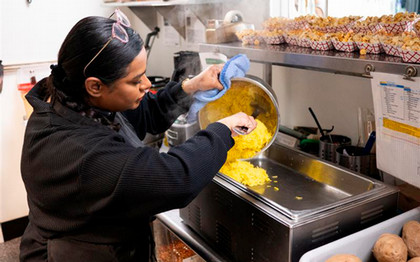
As a trial run, she and Horton planned her first “pop-up” lunch at TOAST: the menu featured beef kabobs, basmati rice, grilled vegetables, hummus, and grilled pita.
“The response from the community was great! People were pleased with the food, and I ended up making up to 60 orders,” Bader said. “I actually cried in the kitchen at TOAST from seeing the lines of people waiting to be seated or to pick up their orders. I cried because Heather supported my food and helped me represent it to the community!”
Customers’ enthusiasm extended beyond the pop-up event, with several encouraging Bader to sell her hummus commercially, so once again, she partnered with TOAST to make it happen and debuted her specialty in TOAST’S grab-and-go case.
Plans are underway for additional pop-up meals, including during ArtWalk on April 18.
Bader said the experience of working alongside Horton and the TOAST kitchen staff was invaluable.
“She leads by example and is passionate, patient, and supportive of the entire kitchen crew, and me,” Bader said. “One of the most valuable things I learned from her was how to properly prepare and portion food for single servings. My background is more focused on buffet-style cooking, so this was a new and very beneficial experience for me.”
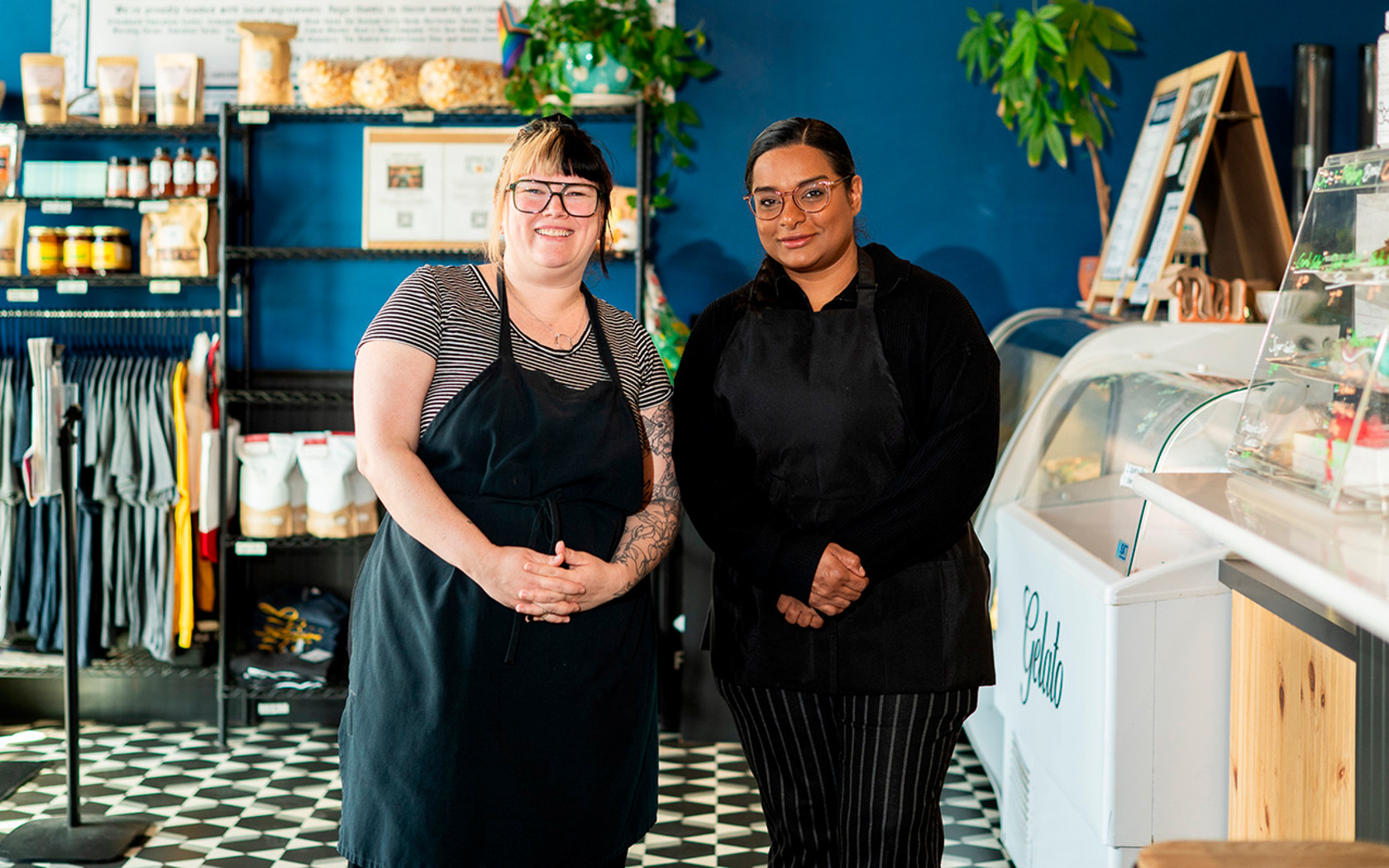
“She took the time to guide me through portion sizes for each item, which helped me better understand consistency and presentation in a professional kitchen sitting,” Bader said. “I'mvery thankful for this opportunity. It added so much to my knowledge and helped elevate my professionalism and skills in cooking.”
For Horton, supporting Bader reflects both her own entrepreneurial experiences and her desire to foster collaboration rather than competition.
“Going through starting my own businesses, I had support from programs like the Small Business Development Center, but I didn’t have anyone in the industry specifically to mentor me or open doors to real customers or a licensed kitchen,” Horton said. “I had to do it all myself from scratch. I often think about how much further along we’d be if I had. That’s why it matters — I want to be that opportunity for someone else.”
“This industry can be competitive and isolating, and I’m interested in building a culture of collaboration,” Horton said. “Helping Fatimah is part of creating that. I'm hopeful she will want to continue with the same spirit!”
Horton said the partnership will continue to evolve, and TOAST will host pop-ups until the incubator kitchen is fully open and Bader is ready to operate independently.
“It’s about taking the next step at the right pace,” Horton said. “Allowing her to grow over time and take advantage of our facility to decide the right direction for her.”
Horton encourages other small business owners to consider mentoring emerging entrepreneurs.
“My advice to other small business owners considering helping a young entrepreneur get started: Do it. It's not only rewarding to help someone else get started, you’re strengthening your local business ecosystem,” Horton said. “It’s energizing, it builds lasting relationships, and honestly, it makes this work feel more meaningful. There’s room for all of us and we can work together to prop up the local culinary scene.”
— Pitt State —