
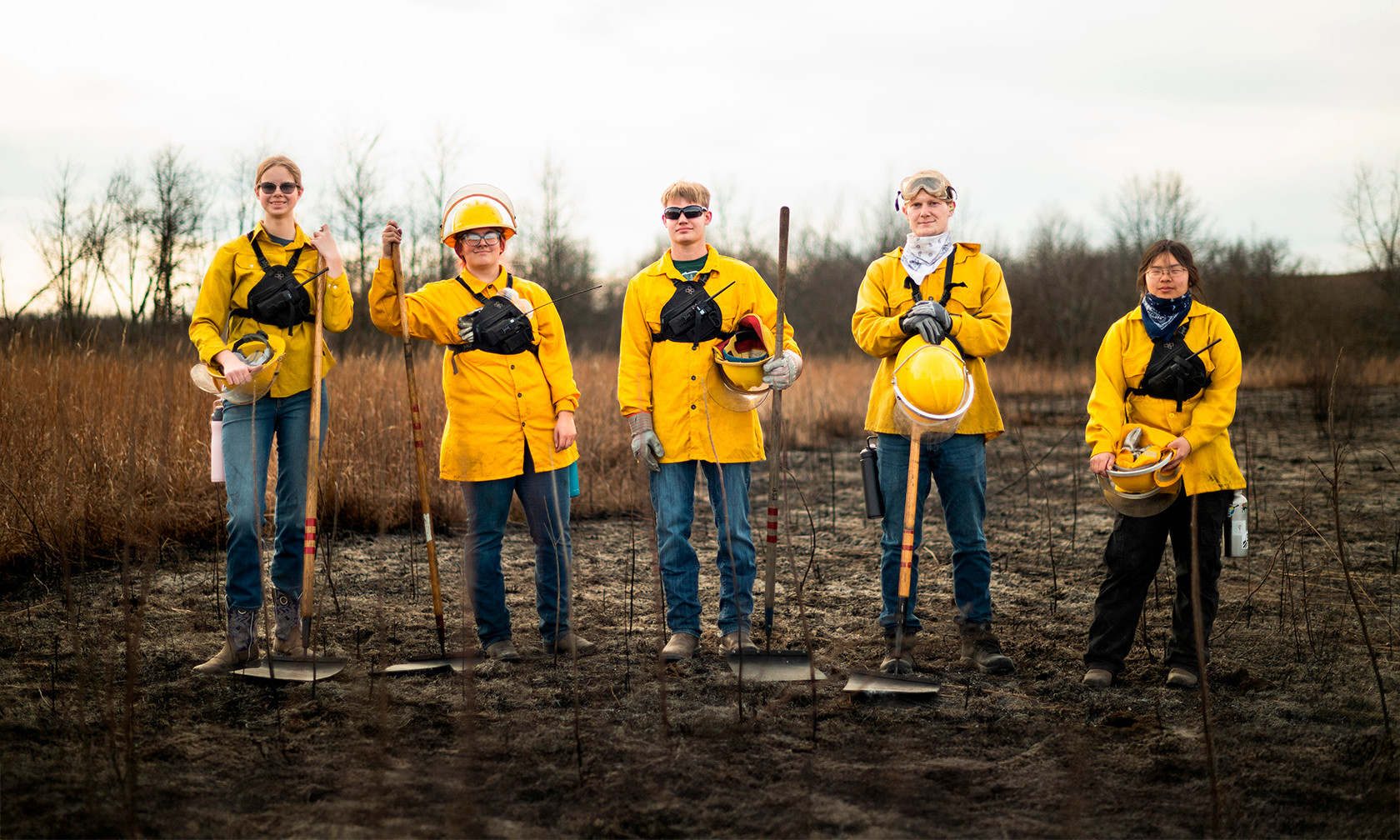
On a gravel road far from the nearest town, Biology major Eva Arb and her classmates are dressed for the field, equipped with walkie-talkies, hiking boots, and yellow shirts that can be seen half a mile away.
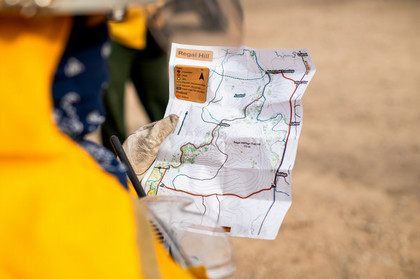
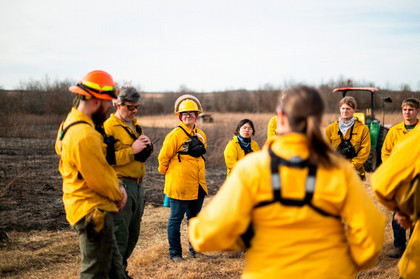
They gather in a circle to review roles, a map, and safety procedures, then load up in ATVs to go apply what they’ve learned in the classroom: how to conduct a prescribed prairie burn.
In doing so, they’re not only earning course credit at Pittsburg State, they are adding career skills to their resumé that are sought after by future employers.

Missouri State Parks ecologist Collin Gilmore, one of the leaders for the prairie burn, says students who graduate with such skills have a much better shot of employment.
“This program with Pitt State is wonderful because when we look at future applicants, we’re looking for people who have the ability to put themselves out there and to also understand the dynamics of what we’re doing,” he said.
“I want someone who has on-the-ground experience. This allows them the hands-on opportunity to put a chain saw in their hands and know how to use it properly, and to manage the land in an effective manner,” he said.
On the prairie
Today, their classroom is 30 minutes from campus: Prairie State Park near Mindenmines, Missouri, where less than 1 percent of the state’s once flourishing tallgrass prairies remain.
Even so, there are 4,000 acres here to manage.
Here, park visitors see panoramic vistas of swaying waist-high grasses and ever-changing wildflowers. They also may spot the park’s resident herd of 60 bison. The park’s nature center offers interactive exhibits and interpretive programs. And the trails take visitors through an ecosystem few humans get to be part of on a regular basis.
The prairie is burned intentionally — something essential for their health, says Park Superintendent Andrew Braun — section by section each year.
“Prescribed burns replicate the role of natural fire which removes accumulated dead vegetation, limits the spread of invasive trees and shrubs, returns nutrients to the soil, and encourages fresh growth of native grasses and wildflowers,” Braun said.
These effects increase plant diversity and provide habitat for wildlife. This land-stewardship practice, first employed for centuries by Native Americans and continued today by land managers, helps prevent prairies from converting to forest and keeps grasslands resilient and productive.
For the students, it’s a labor-intensive job that requires training, focus, and safety. The course in which they are enrolled, Techniques in Natural Resource Management, takes place each year during the university’s five-week winter break.
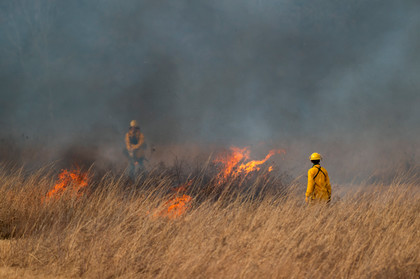
In preparing for and conducting the burn, students rotate responsibilities alongside staff, retired staff, and other volunteers from Missouri State Parks.
“This is a great experience to have while still in college,” said Biology major Caleb Stradley. “I’m a hands-on learner, and to be able to work directly with the manager of a state park is a unique opportunity.”
Arb agreed.
"We're seeing how wind and humidity affects the flames. We had a couple of spot fires, and we need to know how to handle that. These are things we can discuss in a classroom, but until you get outside in the field, you really don’t understand them like you need to.”
Similar hands-on learning happens in every facet of the Biology Department, from botany to wildlife ecology and conservation.
In the stream
Students of Associate Professor James Whitney have been doing long-term, field-based research on the Spring River in Southeast Kansas since 2019. They’re not just learning skills — they’re advancing scientific understanding.
Each summer, they don water shoes and slather on sunscreen before conducting surveys that examine how aquatic ecosystems respond to decades of mining pollution and to cleanup efforts that followed.
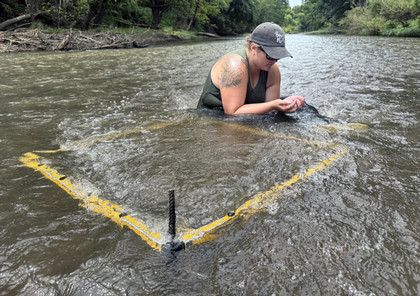
Photo by Celia Llopis-Jepsen / Kansas News Service
They sample fish, insects, and freshwater mussels across sections of the river, including areas that were contaminated by mining and those that remained relatively clean.
By comparing species diversity and population sizes across these sites, students help document how improving water quality is influencing the recovery of aquatic life.
Their work has revealed positive signs, including the return of sensitive fish and several mussel species that had been absent for decades.
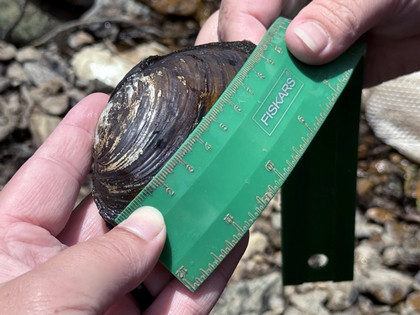
Photo by Celia Llopis-Jepsen / Kansas News Service
Students also have helped confirm the presence of threatened and endangered species, contributing valuable data to regional and federal conservation efforts.
At the same time, their research has uncovered emerging concerns upstream, where mussel populations in historically healthy areas have sharply declined. By combining new field surveys with decades of data, students are helping scientists recognize shifting patterns.
Through this immersive research experience — wading streams, identifying species, and analyzing long-term ecological trends — Biology students are gaining real-world scientific training that will give them the edge when they apply for jobs.
In Fall 2025, their work caught the attention of Up From Dust, an environmental podcast that spans the Great Plains and Midwest. Listen here.
After dark
Each October, Associate Professor Andrew George’s Biology students embark on a field research project to trap, document, and study Gray Bats as they emerge from culverts at sundown to gather scientific data on this federally endangered species and its fall migration.

They use infrared video and harp traps to record bats, take biometric measurements, and test for threats like white-nose syndrome —first detected in Kansas in 2018.
The research addresses gaps in knowledge about the bats’ migration routes, behaviors, and habitat use, with notable findings including long-distance flights of individual bats and changes in seasonal population dynamics.
Across landscapes
George and his students also are tracking bird populations and migration to better understand ecosystem health and the effects of climate change.

Their research is part of the Kansas Motus Project, a statewide collaboration developing a network of automated telemetry stations that detect tagged birds and other animals as they move across the landscape.
They’re conducting regular bird banding in Southeast Kansas, helping establish a long-term monitoring station that will reveal migration patterns and population trends over time.
Learn more about Pitt State Biology: https://www.pittstate.edu/science/biology/