
Science Day
2027 date coming soon!
The programs of Biology, Chemistry, and Physics at Pittsburg State University invite high school science students to participate in individual and team events during the annual Science Day at Pitt State.
About the Science Day
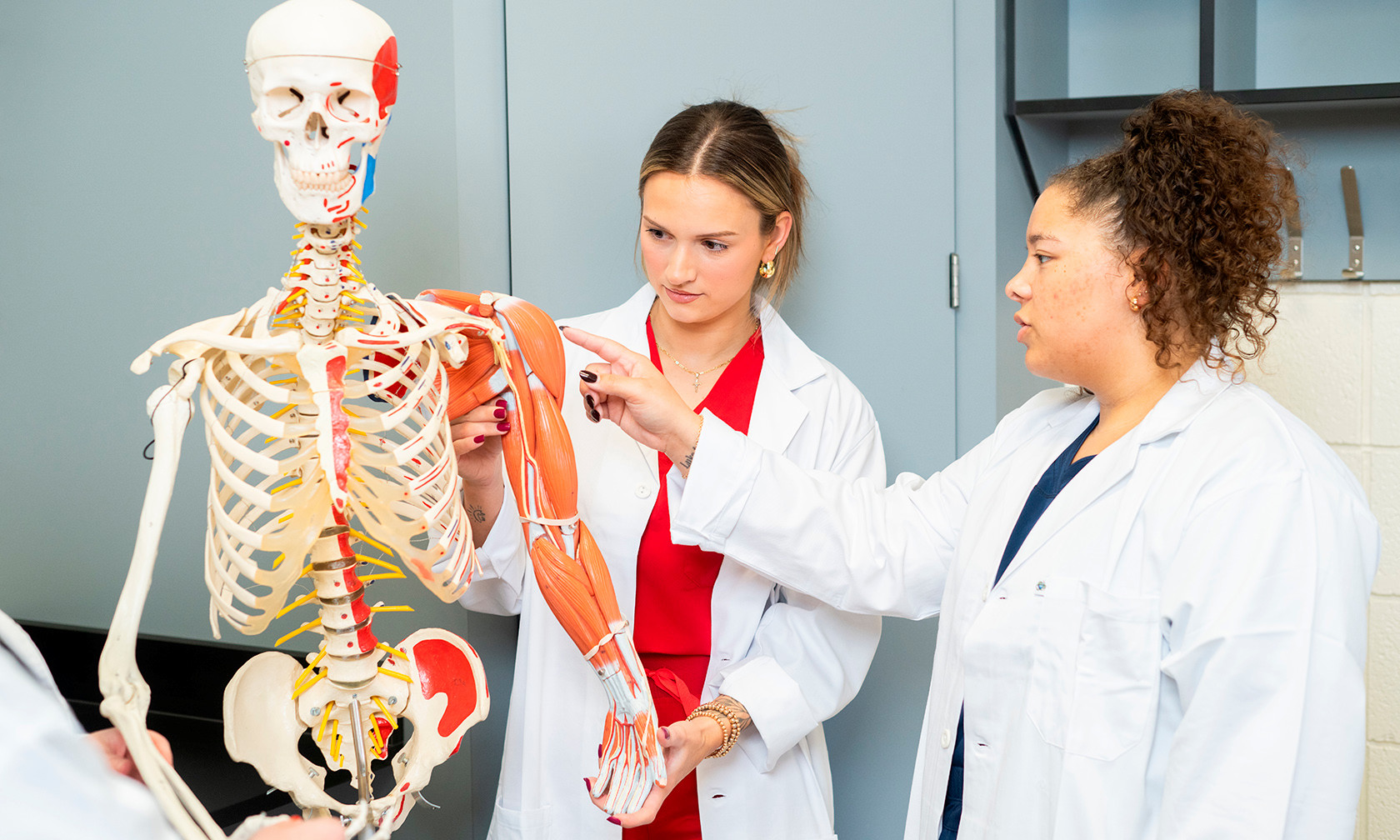
Why Attend Science Day?
Science Day at Pittsburg State University is a long-standing tradition dedicated to inspiring curiosity and excitement for science through hands-on learning. For over 40 years, this event has welcomed students to campus to explore, experiment, and discover the fun side of science.
Students experience science beyond textbooks by taking part in interactive activities that encourage creativity, problem-solving, and exploration.
For the Students
Through fun science experiments, live demonstrations, and interactive challenges, students actively engage with scientific concepts in an exciting and approachable way. These experiences are designed to spark curiosity and help students envision a future in science, technology, engineering, and other STEM-related fields.
Event History
With more than four decades of history at Pittsburg State University, Science Day has become a well-known annual event for schools across the region. We are continuing the mission to inspire generations of students to explore, ask questions, and develop a lasting interest in science.
Rules and Guidelines
Biology Bowl
WRITTEN COMPETITIONS
Entries
A school may enter as many students in each test category as time permits for competition. Any student may enter any number of written test competitions, as scheduling of exams permits (see below).
Tests
Two written tests and two practical exams will be offered, but some will run concurrently.
WRITTEN EXAMS
General Biology, Anatomy & Physiology, and Biology Trivia
All written exams will consist of 50 multiple choice questions. Students will have 40 minutes to complete the exam. Students may sign-up to take both written exams as each exam will be offered at the top of each hour for 3 hours.
Students are asked to show up on time, as once seats are filled, they will be asked to wait until the next time slot to begin.
The tests will be scored for the number of correct answers for the first 45 questions; unanswered questions will be considered incorrect.
In the case of a tie, the last 5 questions will be selected as tie breakers, with the student missing the least number among the last 5 questions winning the tie breaker. If there are still ties after the first tiebreaker, the Science Day coordinator will determine the tiebreaker.
The students with the most correct answers will be awarded medals (there may be ties).
Monitors will oversee and time the written exams. Contestants must stop work immediately when the end of the allotted time is announced or they will be disqualified by the monitors, whose decisions are final.
If a student finishes the test(s) before the allotted time, they may quietly leave the room.
Students are not allowed to take any form of the test out of the room nor can tests be retrieved after the competition.
Personal belongings must be left below their chair.
Scantrons will be used to record answers; they will serve as the official scoresheets. Please be sure to ask students to clearly print their name, their high school, and the test being taken on the Scantron. Please ask students to properly fill in the bubble on the Scantron. This is to make sure that the test results can be recorded properly and awards will be handed out correctly.
PRACTICAL EXAMS
Wildlife ID Quiz
Sounds of Wildlife/Nature
Wildlife Identification
Test your wildlife identification skills! Participants will view a variety of identifiable materials such as tracks, signs of mammals and birds, pelts, and skulls.
Students must make a species identification by writing their answer on the answer sheet provided in the session. Correct responses may be common names but must be specific enough to indicate individual species.
The winner of the event will be the participant who has the highest number of accurate responses.
Top 3 scores will receive a medal (there may be ties).
(updated March 2026)
Sounds of Wildlife/Nature
Expand your biological knowledge by competing in a quiz on natural sounds made by birds, frogs, mammals, reptiles, and insects.
Participants will hear representative samples of tape-recorded animal sounds.
Students must make a species identification by writing their answer on the answer sheet provided in the session. Correct responses may be common names but must be specific enough to indicate individual species.
The winner of the event will be the participant who has the highest number of accurate responses.
Top 3 scores will receive medals. (there may be ties)
TRIVIA BOWL
-
Each school may enter only one team in the Biology Trivia Competition. Each team will have no more than 4 members. A team may continue to compete throughout the day, as long as there are two members present for each round. A team may substitute one member of the roster as long as cleared by tournament director.
-
The trivia competition will occur between 10:00am and 11:30pm, with each round beginning at 10:00am, 10:30am, and 11:00am. Each round will have one 20-minute session of Kahoot questions, with a 5–10 minute recess in between. Questions will be projected on the big screen in Grubbs Hall room 104. All individuals on the team may answer. Team scores will be the sum of all the team members’ individual scores.
-
Up to 12 teams can participate in each 20 minute round. Total scores will be aggregated at the end of all three rounds.
-
The top 3 scoring teams from all three rounds will medal, with the top team score declared the overall tam winner of Biology Trivia. The top 3 individual scores from all three rounds will medal, with the top individual score declared the overall individual winner of Biology Trivia.
All awards will be mailed to the respective schools. Results will be emailed to the HS sponsors as soon as they are available.
ADDITIONAL ACTIVITIES
Cadaver Tours
The cadaver class instructor and student assistants will conduct human cadaver laboratory demonstrations by reservation only.
These tours will be performed in two rooms, in 30-minute intervals, and a maximum of 20 people per demonstration will be allowed.
To reserve a cadaver demonstration, please indicate your preference on the Biology Bowl Registration form along with the number of people who will be attending the tour.
These typically fill on a first-come, first-serve basis; the coordinator has the discretion to move groups as need arises.
Groups must be accompanied by their sponsors and will meet 10 minutes prior to their reserved time in the 2nd floor lobby of Heckert-Wells Hall.
Cadaver Room Rules
As a reminder, there is/will be no photography/pictures allowed in the cadaver room.
Cell phones must be put away and stay in pockets/backpacks/purses/etc. during the entire time students are in the cadaver room.
Failure to respect the provided rules and guidelines or any violation of said rules/guidelines may result in the cancellation of all cadaver tours for the day.
Chemistry Capers
Competitions are divided into First Year and Second Year Students. The competitions begin by first administering Individual examinations for both years. The Individual exams consist of 30 to 40 multiple choice questions along with an essay type tie breaker question. The Individual competitions are allotted a maximum time of 50 minutes. After this period the examinations are graded and the top three winners from each year are decided based on scores on the multiple choice questions and the answers to the tie breaker questions, if necessary.
Following the Individual examination period, teams from both years are administered Team exams, each consisting of two questions with multiple sections. The questions are not multiple choice style and individuals from each team collaborate in solving these questions. The tests are timed and scores are based on accuracy and speed of delivery. Teams consist of 3 students or less. Teams will compete as entered. In the event of a missing team member, a registered alternate may be substituted. Please also note that members of teams are automatically expected to enter in the Individual competitions.
The top 3 winners for each competition will be announced at the Award Ceremony. The top 10 in each category will be posted on the PSU Chemistry website and on the Science Day website. Trophies will be given out at the ceremony and name plates will be mailed to the schools after engraving is complete.
Physics / Earth and Space Science
Mousetrap Car
The purpose of this competition is to build a car whose only source of power is a standard mousetrap. Typical mousetrap cars are built using a metallic wire extension of the trap with a string attached and then wrapped around the axle of the car. The mouse trap car can be built of any materials, however, make certain that the only source of power is the mouse trap itself. In addition, the following rules apply:
- The mousetrap is the only source of power (not those larger traps). Fishing rods, rubber bands, and other materials that stretch or bend may not be used in combination with the mouse trap. These are additional sources of stored energy (they’re essentially springs).
- The mousetrap may not be used as a catapult to project a car down the hallway.
- The cars will run in a hallway approximately 2.5 meters wide, thus straight travel is important.
- Winners will be judged according to the maximum distance traveled.
- Each car may be built by an individual or by a team consisting of 2 people.
Physics Face-Off
NEW: No graphing or programmable calculators are allowed!
No cell phones or I-pads are allowed!
Participants must have pencils with them.
This is a straight-forward competition in which teams of four students each work to solve a set of physics questions and problems within a specified time limit. Your equipment will include high-tech, state-of-the-art pencil and paper, which will be provided. In addition, each participant may bring a non-programmable and non-graphing calculator with them. One team will be allowed for each school, maximum four people per team.
Paper Tower
Limited to 3 teams per school. max 2 people per team
The objective of this competition is to build a free-standing tower of maximum height using a single sheet of 8.5" by 11" photocopier paper and one 50 cm strip of tape. No other materials may be used. Participants will be required to construct their tower at PSU during the timed competition. The paper and tape will be provided, as well as scissors and a ruler. It is recommended that students develop a tower design and practice building it prior to the competition. The paper may be cut or folded into any shape, and the tape used to fasten any parts of the tower together.
- The tower must be free-standing—it may not be attached to the floor, ceiling, or any other object.
- A tower will be declared free-standing if it remains self-supporting for more than 10 seconds.
- Height is determined by measuring the perpendicular distance from the highest point on the tower to the supporting surface.
Each tower may be built by an individual or by a team consisting of 2 people.
Physics Frolics and Earth and Space Science overall competition winners
Total scores are calculated by taking the rank of the top placer from each school as the school's score for that event. If a school does not participate in an event, then they are given a score that is equal to the lowest participant score plus ten for that event. The scores are then totaled and the schools with the lowest point totals win the overall competitions.
Earth and Space Science Events
Astronomical Shuffle
Participants must have pencils with them.
The purpose of this competition is to foster a recognition and appreciation for the astronomical bodies in the Solar System, Milky Way Galaxy, and Universe. The rules are pretty basic: a set of slides will be shown. The participant will decide what it is that is being shown. A form will be provided for answers. One point will be awarded for each correct answer. This competition is for individuals only, although each school may enter as many students as it wishes. Come and see the celestial bodies!
Mars Colony Competition
In this competition, students will build a model of a colony on Mars that could sustain human life. Your model should include as many components as are necessary for a human colony to live on the Red Planet. Your design will have to consider the various environmental conditions on Mars, such as temperatures, climate, availability of resources (food, water, oxygen), gravity, etc. Entries will be judged on uniqueness of design, completeness of design, efficiency of design, and feasibility of design. The model must be self-explanatory, thus entries must have each component of the model labeled indicating the purpose of the component. Each entry may be built by an individual or by a team consisting of up to 4 people.
Rock Recognition
Participants must have pencils with them.
This competition is designed to promote rock and mineral identification and classification according to attributes such as number of cleavage planes, luster, hardness, texture, clast size, intrusive, extrusive, and so on. This competition is for individuals only, although each school may enter as many students as it would like. You don’t have to be a rock hound to enjoy this one—come out and poke through our collection.
Science Day Registration
Schools
If you are a school counselor, teacher, or other school representative, please complete registration for the Science Day.
Have a question? Contact us
Our Community.